The fall of the Berlin Wall stands as a defining moment in modern history. In a short span in 1989, a barrier that split a city and symbolized global division came down, shifting the direction of the world and altering alliances, security, and public ideas about freedom.
The Ultimate Guide previews key 1989 events, the forces that led to the opening, and the long-term consequences that still shape politics and memory. It will connect high-level decisions to everyday moments, showing how ordinary acts became historic milestones.
The guide also explains why Americans should care. Changes in Europe reshaped global security and alliances and influenced how citizens and leaders view democracy. Later sections will show how scholars reconstruct the past from evidence and why interpretations continue to evolve.
Key Takeaways
- The Wall’s fall marked a rapid shift in modern history and global order.
- The guide previews major 1989 events and forces behind them.
- U.S. security and alliances were reshaped by European change.
- Ordinary people’s actions turned into defining historic moments.
- Scholars use varied evidence to reinterpret 1989 over time.
Why the Berlin Wall Mattered to the Cold War World
Berlin’s divided streets made the Cold War visible in ways few other cities could. East and West Berlin served as clear symbols of competing political and economic systems. The contrast was obvious: different currencies, different broadcasts, different laws.
East and West as Competing Systems
The Wall turned ideology into physical separation. It showed how rival models of governance shaped daily life and civic norms. Leaders used Berlin as a stage for propaganda and strategic posturing that echoed across the world.
How the Wall Shaped Daily Life and Work
The barrier determined who could travel, where families could live, and what jobs people could hold. Commuting routes, schooling, and access to consumer goods followed the line on the map.
- Work and movement: Many people faced longer commutes or lost job options because of restricted crossing points.
- Cultural split: Media choices and consumer expectations diverged, creating distinct urban identities.
- Global impact: The Wall mattered to policymakers who saw it as a symbol and a strategic problem.
These practical limits made the past and its divisions part of ordinary routines. The pressures built over years and set the stage for the events that accelerated in the late 1980s.
What Led to 1989: Pressure Building Across the Eastern Bloc
By the late 1980s, mounting economic strains and political doubt had eroded the authority of many Eastern Bloc regimes. Chronic shortages, stalled productivity, and growing public distrust weakened leaders’ claims to legitimacy.
Economic strain and political legitimacy
State budgets sagged while consumer goods remained scarce. Wages failed to keep pace with prices, and many citizens judged their governments on daily needs as much as ideology.
Public protest movements and shifting expectations
Small demonstrations grew into sustained protests. Reform signals from some governments encouraged people to press for more than minor changes.
Across several countries, citizens learned that collective action could produce results. That rising expectation reshaped the record of power long before the Wall fell.
How reforms and communication cracks changed control
Reforms, ambiguous orders, and quicker media dissemination created “communication cracks.” Misstatements and unclear directives made enforcement uneven.
- Faster information: News and images moved beyond official channels.
- Unpredictable enforcement: Local officials hesitated to apply harsh measures.
- Regional pattern: Germany shared traits with others, yet local politics made outcomes unique.
These combined pressures built over years and made a sudden breakthrough in November more likely, even if few could predict the exact events that would follow in the past.
The Day the Wall Opened: Key Events of November 1989
On a chilly November evening, crowds, unclear orders, and live broadcasts combined to make a single, decisive day. What followed was less a scripted plan and more a chain of improvised decisions that reshaped recent history and the way people remember the past.
The press conference moment and why it mattered
A government press conference issued new travel rules in vague language. Reporters repeated the ambiguity and many listeners heard permission to cross immediately. That perceived green light set off mass movement and irreversible change.
Border crossings, crowds, and split-second choices
Thousands gathered at checkpoints. Guards received conflicting orders and faced crowd pressure. Some opened gates to avoid violence; others hesitated. Those on-the-spot choices turned uncertainty into decisive action.
How television turned a local event into a global story
Live images showed cheering people and soldiers lowering barriers. Television made the moment visible across the world and widened its impact within hours. The night’s footage became the defining story people returned to when recalling the history of that day.
Key People and Decision-Makers Behind the Scenes
A mix of formal roles and spontaneous choices shaped what unfolded at the Wall. Party officials, press officers, and border commanders wrote rules and sent orders. Communications teams relayed unclear guidance that left local commanders to decide in minutes.
Government officials, border forces, and limits of control
Rules only work when orders are clear and enforcement teams trust their leaders. Late Cold War strains reduced that trust.
- Types of decision-makers: party officials, communications staff, border commanders.
- System failures: slow bureaucratic feedback and vague memos can collapse under rapid public pressure.
- Risk assessment: commanders weighed receipts of force against crowd safety; restraint sometimes prevented bloodshed.
Protesters, citizens, and ordinary influence
Protesters and ordinary citizens made checkpoints the decisive stage. Showing up, filming, and calling friends created momentum without a single leader.
Collective presence converted small acts into public outcomes and helped shape reunification by forcing institutions to adapt. Those local choices now form part of the modern history of the past.
Germany After the Wall: Reunification and Its Challenges
The move from open border to a single nation required fast deals, legal work, and wide international consent.
Political pathway and international acceptance
Negotiations compressed into months. Leaders agreed treaties, currency union, and a timetable for elections.
International legitimacy mattered. Allied powers and neighboring states had to accept the change for it to be stable.
Merging institutions and urgent fixes
East and West merged laws, pensions, and public services almost overnight. Administrations faced legal conflicts and staffing shortages.
Local governments adapted quickly, but many systems required correction over the following years.
Social gaps, identity, and memory
Economic gaps showed up in jobs, wages, and infrastructure investment. Opportunity grew unevenly across regions.
Family stories shaped how communities remembered the past and formed political views.
- Uneven benefits: Gains came faster in some places than others.
- Ongoing work: Debates about commemoration and a shared narrative continue today.
The United States and 1989: Policy, Diplomacy, and Public Reaction
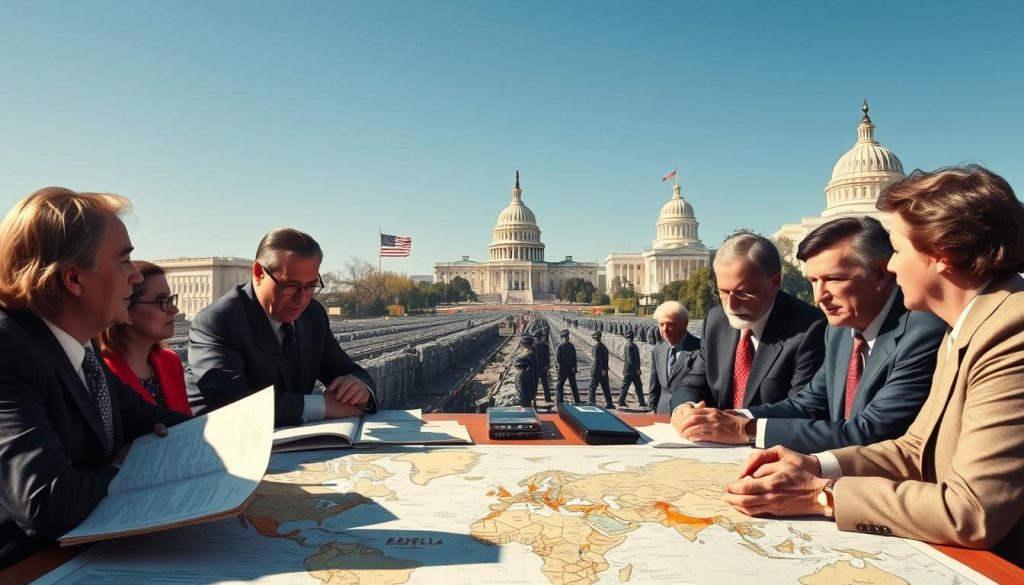
American leaders watched November 1989 with a mix of optimism and strategic caution.
Policy makers celebrated the moment as a diplomatic success while weighing risks to NATO and arms control. They framed the Wall’s fall as progress in the broader history of democratic expansion, but kept plans for contingency and alliance reassurance.
What Americans saw on screen
Television footage of crowds toppling barriers shaped public feeling. Live images made complex foreign events feel immediate and hopeful.
Shifts in defense and alliances
Defense planners adjusted nuclear posture and alliance roles as Europe stabilized. Institutions began redesigning strategy for a less bipolar world.
Business expectations and the longer view
Markets saw new openings as borders opened. Companies weighed growth against political uncertainty and long-term costs.
In the past, these reactions set narratives that still influence debates in the united states today about democracy, intervention, and global leadership.
How the Fall Reshaped Europe and the Wider World
The collapse of the barrier in 1989 forced Europe to reimagine where lines of security and partnership actually ran. That shift rippled through alliances, markets, and the lives of millions.
Changing borders, alliances, and security assumptions
Borders stopped feeling permanent. NATO, EU neighbors, and regional actors found that old Cold War rules no longer fit. States renegotiated treaties and tested new security arrangements.
Democratic transitions and new political risks
New elections and parties brought hope, but rapid change also produced fragile institutions. Some countries faced political instability as leaders, courts, and media adapted to democratic norms.
Economic integration, migration, and long-term ripple effects
Markets and business strategies moved together with policy reforms. Investment flowed unevenly; migration rose as people sought work, family reunions, or safety across newly open borders.
- Outcomes varied: some states prospered; others struggled with reform.
- The united states became a key stakeholder, backing institutions and new security templates.
- Across the years, debates about identity, borders, and integration remain part of public life today.
Cultural Shifts: Stories, Symbols, and Life Today
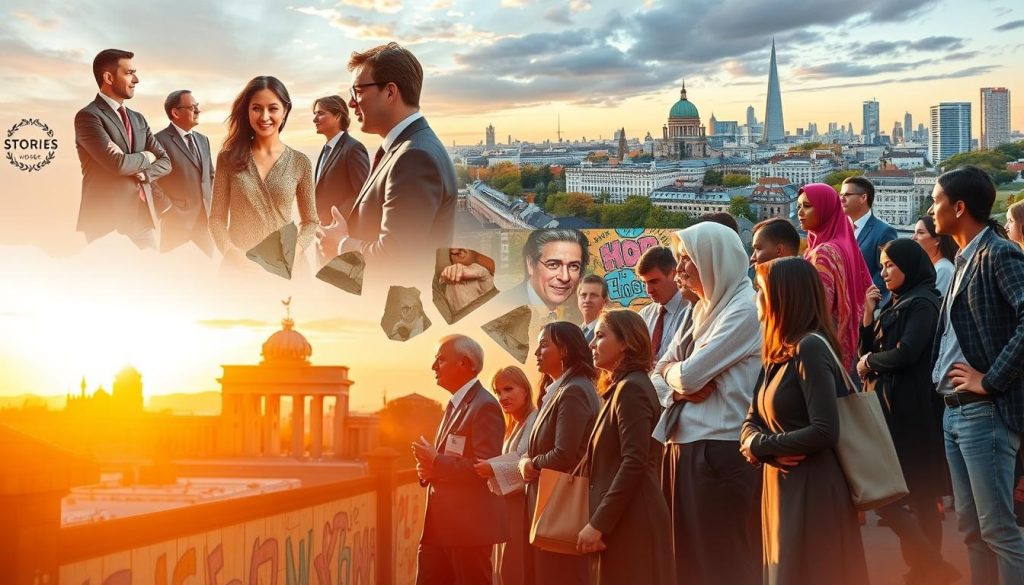
Over time the Wall moved from a physical obstacle into a powerful cultural shorthand.
It appears in films, music, photography, and public art as a compact way to tell a larger history. Artists reuse fragments to signal division, hope, or change.
Art, media, and simplified meanings
Popular culture can simplify complex events. A single mural or movie scene often stands for many facts.
That simplification can help memory but also replace detail. Viewers should seek context, not just symbols.
Personal stories and public memory
Families and neighbors pass down small accounts of school, work, and lost visits. Those tales shape identity and civic views today.
- Personal narratives keep the past alive and humanize large history themes.
- Guided tours, memorials, and standing Wall segments link stories to places people can visit.
- Readers should treat cultural narratives as meaningful but partial and check facts when needed.
History as a Discipline: How Scholars Study the Wall’s Fall
Researchers approach the events of 1989 as puzzles to be solved using traces left in archives, media, and memory. Scholarship treats this work as a disciplined method, not simple storytelling.
Method and sources
History relies on primary sources created at the time—orders, footage, diaries, and recordings—and on secondary works that analyze those items. A source can act as primary or secondary depending on how a researcher uses it.
Source criticism and reliability
Scholars test authenticity, authorship, and bias. They check translations, compare accounts, and look for omissions. External and internal criticism help reveal forgeries, errors, or partial truths.
Gaps and changing interpretations
Some decisions left little record. Silences shape later narratives and require careful inference. New archives or fresh methods can change how people read the record.
Historiography and debate
Interpretations shift as evidence and perspectives evolve. Debates help refine explanations and show that writing about the past is an active, contested process.
- Define method: evidence-driven interpretation.
- Distinguish sources: primary vs. secondary use.
- Evaluate claims: authenticity, bias, and gaps.
Where the Evidence Lives: Archives, Museums, and Public History
Collections of papers, photos, and tapes form the backbone of reliable public narratives. Archives preserve the original record that makes careful history possible. They store documents, audio, and images under standards that long-term research requires.
Why archives matter
Archives protect raw sources for scholars and the public. Proper cataloging and conservation turn fragile items into accessible materials for future work.
How access works in practice
Access means cataloging, climate-controlled storage, and digitization. Digital databases speed research and help teachers, but they also require clear provenance to be trusted.
Museums and public presentation
Museums translate complex records into exhibits. Curators select items and design displays to explain events clearly while keeping evidence visible.
Choosing trusted institutions
Visitors should favor well-documented exhibits and brands with cited sources. Compare interpretations at several places—different curatorial choices can highlight varied stories without changing the underlying evidence.
Conclusion
A single chain of choices and mass movement turned mounting tension into an irreversible day in modern history. The fall combined structural pressure, rapid communication, and on-the-spot decisions to create a decisive public moment.
The guide’s main takeaway is clear: leaders matter, but collective action, muddled communications, and ordinary people also steer outcomes. Those mixed forces made the November events both dramatic and durable.
Reunification unfolded over years, not overnight. The world gained new ties and freedoms, yet new political and social challenges followed as institutions adapted.
Popular stories open doors, but evidence and trusted archives give fuller truth about the past. Readers should use credible sources to deepen understanding.
Studying this history helps citizens today weigh change, borders, and civic duty with clearer judgment.
FAQ
What made the Berlin Wall so important to the Cold War world?
The Wall stood as a physical and symbolic divide between competing political and economic systems. It separated East and West Berlin, restricted movement, and became shorthand for the broader contest between communist and democratic capitalist models. Its presence shaped diplomacy, defense planning, business expectations, and daily life in Germany and across Europe.
How did the Wall affect everyday life, work, and movement for people in Berlin?
The barrier limited travel, split families, and constrained employment opportunities for East Berliners. It enforced migration controls that altered labor markets and shaped social networks. Over decades, residents adapted routines around checkpoints, trains, and restricted zones, while rhythms of work and community diverged markedly between East and West.
What economic and political pressures built across the Eastern Bloc before 1989?
By the late 1980s, central planning inefficiencies, stagnating productivity, and shortages eroded the legitimacy of communist governments. International economic trends and mounting fiscal strains increased public dissatisfaction. These structural problems combined with rising expectations for reform to weaken state control across several countries.
What role did protests and public movements play in bringing down the Wall?
Sustained demonstrations, civic organizing, and visible dissent in East Germany and neighboring states created political pressure that authorities could not fully contain. Mass protests in Leipzig, Berlin, and other cities changed the record of power by signaling broad popular demands and reducing officials’ ability to govern through coercion alone.
Why is the November 1989 press conference often cited as a turning point?
A government press briefing on November 9, 1989, contained unclear wording about travel rules that many interpreted as immediate permission to cross the border. That moment crystallized public expectation and triggered rapid action by border guards, officials, and citizens. The press conference accelerated decisions made in real time and helped transform policy into reality.
What happened at the border crossings the night the Wall opened?
Crowds gathered at checkpoints such as Bornholmer Straße and Brandenburger Tor. Border guards, confronted by large numbers and lacking clear orders to use force, eventually opened gates or stepped aside. The crossings became scenes of jubilant reunions, spontaneous celebration, and the beginning of mass movement across the city.
How did television and media turn a local event into a global story?
Live television images of people climbing the Wall, embracing family members, and cheering circulated worldwide. Major networks in the United States and Europe broadcast those scenes, shaping public perception and diplomatic reactions. Visual coverage amplified the event’s symbolic power and influenced governments and businesses monitoring the unfolding transition.
Who were the key decision-makers during the fall of the Wall, and what limits did they face?
Government officials, politburo members, border forces, and local administrators shaped outcomes. Many faced constrained authority, incomplete information, and competing pressures from citizens and higher-level political actors. Border guards often had limited orders and chose de-escalation; that pragmatic discretion was decisive in the events of November 1989.
What role did ordinary citizens play in changing events?
Protesters, neighborhood activists, and families demanding freedom created the momentum for change. Their sustained presence, public testimonies, and willingness to risk confrontation altered political calculations. Grassroots organizing, petitions, and mass demonstrations forced policymakers to respond or lose legitimacy.
How did reunification proceed after the Wall fell, and what challenges followed?
Political steps toward reunification included negotiations between East and West German leaders, treaty-making with international partners, and legal integration under the Federal Republic’s framework. Challenges included aligning legal systems, addressing economic disparities, and managing unemployment and social dislocation in former East German states.
What social and economic gaps persisted between East and West Germany?
Differences in wages, employment levels, infrastructure quality, and public services persisted for years. Many eastern regions faced higher unemployment and slower investment, while western industries adjusted to new competition. Cultural differences and divergent life experiences also shaped identity and memory during integration.
How did U.S. leaders and policymakers interpret the events of 1989?
American officials saw the fall as a major diplomatic victory for democratic movements and as an inflection point for NATO strategy and global alliances. The U.S. adjusted defense postures, reassessed economic ties, and pursued policies to support democratic transitions and market reforms in Central and Eastern Europe.
How did American media cover the fall of the Wall, and what did viewers see?
U.S. networks provided live broadcasts, expert analysis, and human-interest stories that emphasized freedom and reunification. Coverage highlighted emotional reunions and political implications, influencing public opinion and business leaders watching for changes in trade and investment opportunities.
In what ways did the Wall’s fall reshape Europe’s security and alliance structures?
The collapse of communist control led to altered security assumptions, NATO expansion debates, and new partnerships. Borders shifted, alliances adapted to a less bipolar world, and policymakers confronted questions about regional stability, arms control, and the role of international institutions.
What long-term economic and migration effects followed the end of division?
Integration fostered new trade flows, foreign investment, and labor mobility across Europe. Economic convergence took decades, with migration patterns reflecting opportunities in western cities and ongoing demographic shifts. Markets and businesses adjusted to a larger, more interconnected European economy.
How did the Wall transform into a cultural symbol in art and media?
Filmmakers, musicians, and visual artists used the Wall as a motif for division, memory, and reconciliation. Museums and commemorative projects turned fragments and checkpoints into exhibits that explore identity, trauma, and resilience. Cultural works keep the story present for new generations.
How do scholars study the fall of the Wall and the events of 1989?
Historians and social scientists analyze primary sources—official records, personal testimonies, media footage—and secondary literature to reconstruct events. They apply source criticism to evaluate reliability, compare perspectives, and trace how interpretations evolve with new evidence and methodologies.
Where can researchers find reliable archives and exhibits about the Wall?
Major archives and museums—such as the German Historical Museum, the Berlin Wall Memorial, the National Archives in Washington, and university collections—preserve documents, photographs, and recordings. Trusted public-history institutions and branded exhibits provide curated access to primary materials and scholarly commentary.
How do personal stories and family histories contribute to understanding the Wall’s impact?
Individual testimonies reveal daily realities, coping strategies, and emotional consequences that official records often omit. Oral histories and family archives illuminate migration choices, intergenerational memory, and personal adaptations that shaped life in a once-divided city and continue to influence identity today.