The Cultural Revolution is presented as a defining chapter in modern history and as a major global event that shaped politics and culture beyond China’s borders.
The introduction frames Mao Zedong’s radical experiment as a bid to transform power, art, and daily life. It outlines what readers will find: a clear timeline, key figures, main campaigns, and how people lived in both cities and the countryside.
The piece previews the structure: conditions before 1966, Mao’s aims, core groups, turning points, propaganda, cultural heritage, human rights concerns, and economic disruption across the years. It treats history as evidence-based, built from documents, memories, and competing interpretations.
This guide is geared to a United States audience seeking reliable context and a practical framework to evaluate sources. It explains why the Cultural Revolution matters today and how scholars assess the events that remade a nation and affected the wider world.
Key Takeaways
- The Cultural Revolution is a pivotal modern historical event with global impact.
- The guide provides timeline, major figures, and core campaigns for clarity.
- Mao’s campaign reshaped politics, culture, and everyday life across years.
- The article uses documents and memories to build an evidence-based account.
- Readers from the United States get tools to judge sources and narratives.
- The story remains relevant to discussions of power, culture, and rights today.
Why the Cultural Revolution Matters in World History Today
The Cultural Revolution left a wide imprint on institutions, daily routines, and how communities remember the past. It matters to readers in the United States because its scale shows how political campaigns can touch every corner of public and private life.
A radical experiment that reshaped people, education, and cultural heritage
The campaign changed how people identified themselves and pursued work. Schools and universities became arenas for political legitimacy, affecting careers and social status.
Attacks on cultural heritage sought to redefine what counts as authentic culture. Those actions still shape debates about preservation and public memory.
How the era still influences politics, business, and daily life narratives
Contemporary politics and business sometimes echo lessons from that period about conformity, risk, and survival. Managers and officials may reference those experiences when shaping organizational rules.
- Why it matters: the event is a case study in mass social engineering.
- Why it persists: contested memories keep the topic alive in families and communities.
- What follows: later sections separate verifiable events from interpretation while centering human consequences.
China Before 1966: Conditions That Set the Stage
The decades after 1949 created systems and habits that shaped political life for a long time. The party built new institutions and launched campaigns that changed work, land use, and local authority.
Post-1949 state-building and the push to redefine society
The state reorganized schools, factories, and rural life to bind people to national goals. Mass mobilization grew familiar as a method to reach policy aims. That practice made large-scale political movements seem normal and effective.
Ideology, generations, and the struggle over authority and “correct” culture
Ideology became the metric for who could lead, teach, or publish. Older cadres and professionals risked being labeled backward. Young people won new influence and sometimes challenged elders.
- Generations clashed over credentials and loyalty.
- The past was recast as a political obstacle or a source of legitimacy.
- The role of youth as a political force grew quickly.
These conditions help explain why disputes over culture and authority escalated fast. In short, the prior period set the structural stage for sudden, wide-ranging upheaval in later years of Chinese history.
Mao Zedong’s Goals and the Logic of Permanent Revolution
Mao pursued a politics of constant upheaval to prevent bureaucracy from hardening into a rival power. His aims combined practical moves to reassert leadership with broad cultural demands that remade institutions.
Reasserting leadership and remaking institutions
Party organs, schools, and cultural bodies were recast to reward loyalty and purge perceived complacency. This reset aimed to discipline rivals and change the way officials judged merit.
Mobilizing youth and redefining the role of “the people”
Young activists were given authority to challenge established hierarchies. That tactic recast the role of the people from observers to front-line participants in political action.
Revolutionary culture as a tool to reorder work, family, and public life
Revolutionary norms reshaped everyday expectations: acceptable speech, dress, work routines, and even family background mattered for access and trust.
- Logic: perpetual campaigns kept targets in motion and justified new purges.
- Effect: activism rose while professional standards and governance often weakened.
- Follow-up: subsequent sections examine which groups executed these aims and how troubles escalated.
Key Figures and Groups Who Drove the Movement
The Cultural Revolution unfolded through networks of schools, workplaces, and local committees rather than a single, uniform command. This section identifies the main actors and explains how their clashes shaped events on the ground.
The Red Guards and mass mobilization across ages and schools
The Red Guards were youth-led groups that spread rapidly through campuses. They changed school life and social status, pushing students into public politics and disrupting routine education.
Party officials, local power struggles, and shifting alliances
Local cadres often balanced loyalty to central leaders with survival at the county level. These shifting alliances decided who was protected and who was exposed to campaigns.
Intellectuals, teachers, and workers caught in political campaigns
Teachers, scholars, and skilled workers became symbolic targets for being labeled “old” or out of step. Their removal altered professional standards and interrupted vital work.
Families, communities, and the human cost carried across generations
Families bore stigma, broken schooling, and forced separations. Communities lost trust as reputations and livelihoods changed abruptly.
- Takeaway: the movement operated through interaction among people, institutions, and local conflict—no single group explains everything.
Core Events and Turning Points in the Cultural Revolution
A sequence of dramatic episodes transformed routine campaigns into moments of mass violence and state intervention. This section maps major events and turning points that changed the movement’s intensity, targets, and geographic reach.
Early campaigns and the rise of public criticism
Early campaigns used public criticism sessions and denunciations to mark people as enemies. These sessions made political labeling a tool for social control and fear.
Factional conflict and local breakdown
Competing groups claimed revolutionary legitimacy and often clashed. Factional fights escalated into violence and disrupted local governance.
Military involvement and restoring order
As unrest spread, the state increasingly relied on the military to restore control. Troops moved into cities and rural areas to separate factions and reassert authority.
Late consolidation and transition out of chaos
In later years, institutions sought predictable governance again. Authorities consolidated power, curbed mass campaigns, and began rebuilding administrative routines.
- Note: the historical record and available information vary by locality, so some episodes are better documented than others.
Everyday Life During the Cultural Revolution
Daily life was reorganized around party priorities, turning simple tasks into potential political displays. This shift moved the focus from routine concerns to constant evaluation by peers and officials.
Schooling, education policy, and the remaking of youth experience
Schools prioritized political study over tests. Education became a place for mass meetings, struggle sessions, and public critique.
Many students left classrooms to join campaigns. Youth experience changed from private learning to public performance.
Work, state supervision, and pressures on professional life
At work, the state required political reports, meetings, and self-criticism. Careers rose or fell based on perceived loyalty.
Technical skills lost ground to political credentials, and factories and offices felt constant scrutiny.
Family dynamics, fear, and social trust in neighborhoods
Families faced suspicion; private speech could attract denunciation. Neighbors watched one another, and trust frayed.
People coped by staying silent, conforming publicly, or relying on tight networks for survival. These everyday constraints later shaped how cultural narratives and propaganda reinforced control.
- Takeaway: politics penetrated schooling, work, and family life on a typical day.
Culture, Heritage, and Museums: What Was Targeted and Why
Cultural objects and sites were framed as political obstacles, not neutral remnants of the past. This recasting made temples, books, family genealogies, and fine arts primary targets during campaigns. Museums and private collections often stood in the crosshairs because they embodied social rank and older values.
Attacks on cultural heritage and symbolic “old” traditions
Targets included artifacts, religious sites, and archives tied to pre-revolutionary status. Mob actions, public denunciations, and official policies removed or destroyed materials that were seen as evidence of backward ideas.
What survived: preservation, hidden collections, and later recovery efforts
Individuals and some institutions hid objects or dispersed items to protect them. Over time, recovery efforts, cataloging, and conservation helped restore parts of collections and local memory.
How museums and archives help rebuild public memory today
Museums and archives now play a public role in establishing provenance and strengthening the historical record. Readers can assess exhibits by checking cataloged holdings, conservation notes, and digital resources from trusted institutions.
- What to look for: documented provenance, curator essays, and searchable collections.
- Why it matters: recovery shapes identity and debates about which past is honored.
Information, Propaganda, and Narrative Control
When media and posters repeated the same lines, private doubts often went unspoken and public belief shifted. Slogans and state outlets created a steady drumbeat that made certain views feel normal and others risky to voice.
Slogans, posters, and mass media as tools to shape public belief
Slogans condensed complex aims into repeatable commands. Posters and radio amplified those lines across schools, factories, and neighborhoods.
Over time, repetition trained people to answer and act in predictable ways. This produced a flood of seemingly abundant sources that are nonetheless biased.
Silences in the record and why some stories are hard to verify
Historians warn that loud sources can mask gaps. Some events were never recorded, others were edited, and many personal accounts never reached archives.
- Compare multiple sources and note who produced each document.
- Treat viral anecdotes with caution; seek corroboration.
- Ask why a gap exists before assuming the absence proves nothing happened.
Practical rule: read sources for purpose and audience. That method helps separate propaganda from reliable information and prepares readers to judge later accounts of violence and responsibility.
Human Rights, Violence, and Social Trauma
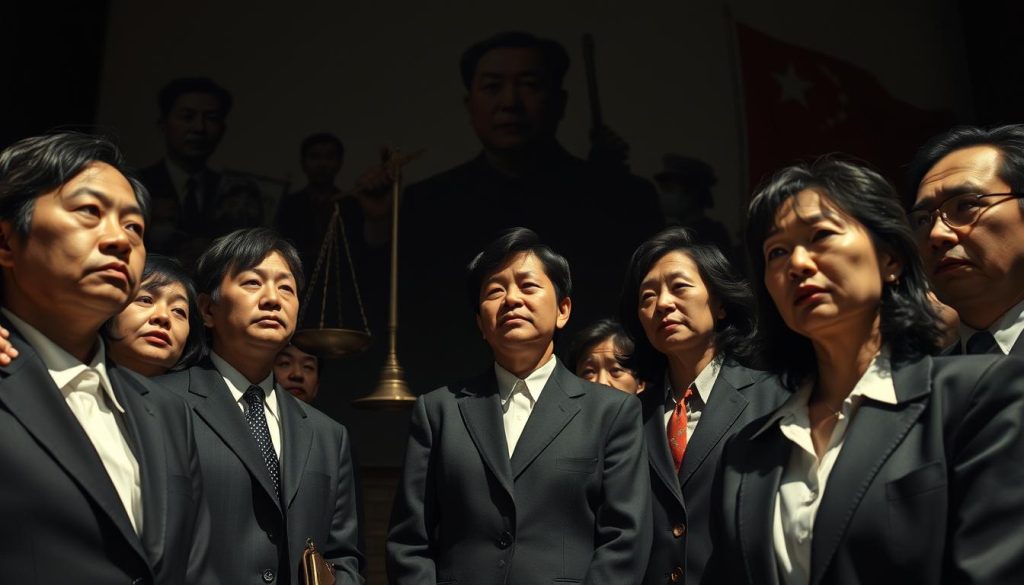
Political campaigns turned routine institutions into arenas where punishment and reputation were publicly decided. That conversion left deep marks on communities and on the people who lived through it.
Persecution, detention, and public humiliation as tools
Persecution took many forms: detention, forced confession, and public humiliation. Officials and mass groups used these methods to enforce conformity and punish alleged disloyalty.
Public shaming signaled power to others and made dissent costly. For many, short detention or a struggle session changed the rest of their social standing.
Long-term effects on trust, identity, and family life
Violence and fear reshaped everyday behavior over time. People learned self-censorship and opportunism, and neighbors often stopped trusting one another.
Trauma left persistent effects: identity fragmentation, stigma across generations, and weakened family ties. These changes also damaged governance capacity and professional standards when expertise lost ground to political loyalty.
- Variation matters: experiences differed by locality and social status; no single story fits all.
- Why it matters: understanding these harms helps readers place the Cultural Revolution in broader history and assess its human cost.
Economic and Institutional Disruption: Impacts on Work and the State
Large-scale political events interrupted training, reassignment, and everyday management in both factories and offices. Campaigns forced managers to weigh political loyalty over technical skill, which cut short career paths and slowed productivity.
How campaigns affected productivity, careers, and organizational life
Workplaces saw halted training pipelines and frequent personnel reshuffles. Skilled workers were reassigned or sidelined, reducing output and undermining routine maintenance.
Result: short-term zeal often created long-term gaps in expertise and slowed recovery when normal operations resumed.
Institutional consequences for governance and professional standards
Institutions adapted to survive by avoiding initiative and delegating risk upward. This produced weaker accountability, lower professional standards, and incentives to prioritize conformity over competence.
- Uneven effects: regions and sectors experienced different impacts, so national summaries mask local variation.
- Lesson for business: politicized evaluation systems harm performance and discourage innovation.
- Evidence need: assessing institutional damage requires documents, statistics, and cross-checked local records.
How Historians Study the Cultural Revolution: Sources and the Historical Method
Scholars combine documentary evidence, oral testimony, and material traces to test competing explanations of what happened. That process defines the academic study of the human past: analyzing evidence to build a reasoned account of causes, context, and consequence.
Primary and secondary sources
Primary sources are direct records from the time: speeches, posters, directives, photographs, and memoirs. Secondary sources are later analyses that interpret those materials. A document can function as either, depending on how a researcher uses it.
Source criticism: testing authenticity and bias
Researchers check authenticity (dates, provenance) and internal bias (author intent, audience). They cross-reference accounts to separate propaganda from verifiable fact.
Archives, libraries, and digital resources
Archives and libraries preserve bulk material; museums and databases add photographs and artifacts. Digital repositories expand access but can reflect selective digitization and limited access to local records.
Periodization and synthesis
Scholars divide the era into meaningful segments—early escalation, factional conflict, military intervention, winding down—to clarify cause and effect. Synthesis links fragments into coherent narratives while marking where evidence is thin or contested.
- Practical rule: weigh each source for provenance and purpose.
- Why it matters: careful methods help readers judge claims about these events and the past.
Historiography and Debate: Competing Interpretations and the Risk of Pseudohistory
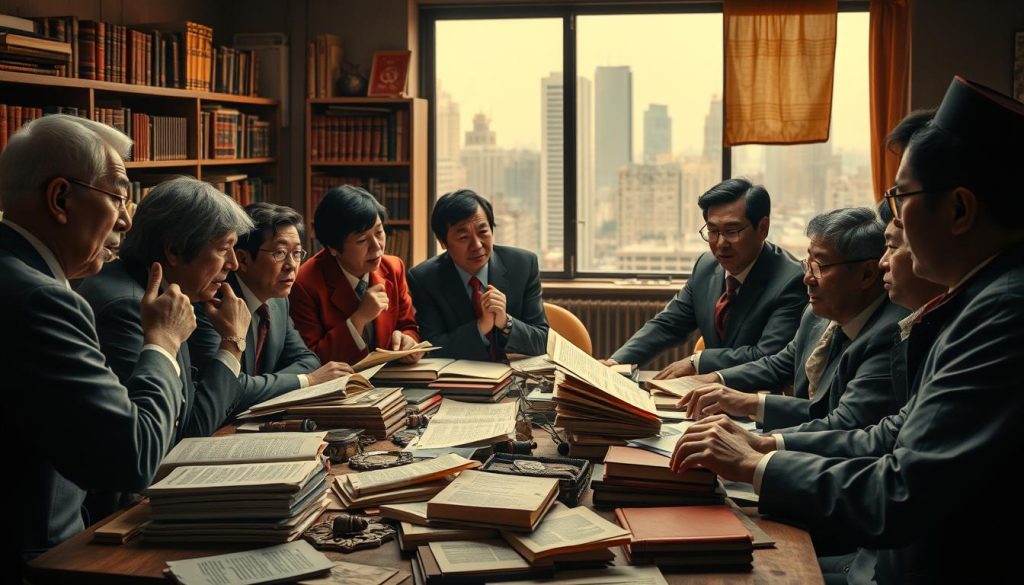
Competing schools of thought turn one subject into many possible narratives rather than a single story. Scholars combine documents, oral testimony, and material evidence, and each choice shapes what counts as convincing evidence.
Why broad narratives break down
Grand narratives collapse when new sources or methods reveal gaps. Local archives, memoirs, and regional studies often contradict sweeping claims made from central records.
Result: multiple, sometimes conflicting accounts coexist, and readers must weigh evidence quality.
Common distortions and pseudohistory
Pseudohistory relies on selective evidence, quote‑mining, or denialism. Such approaches mimic scholarship but omit counterevidence or ignore provenance.
Red flags include dramatic claims without citations, reliance on anonymous sources, and emotionally charged language designed to go viral.
How reputable standards guide readers in the United States
U.S. readers should favor university presses, peer‑reviewed journals, and established reference works that note limitations and engage rival interpretations.
- Look for transparent sourcing and documented archives.
- Prefer works that address counterevidence and uncertainty.
- Use major journals and academic publishers as starting points for balanced stories.
Practical rule: treat viral claims as prompts to verify rather than final conclusions. Comparing sources and checking provenance helps distinguish rigorous scholarship from ideological storytelling.
Conclusion
The Cultural Revolution remains a defining chapter in modern history that linked political aims to tangible social change across the world. It ties causes, major events, and the lived reality of millions into a single, complex record.
The piece stresses why those lessons matter today: changes in schools and professional life reshaped education, institutional trust, and public memory over time. Readers should note how loss and recovery of culture shape what communities remember and value.
Museums and archives play a key role in rebuilding the public record; they enable accountable work and clearer inquiry. Responsible study relies on evidence, source criticism, and openness about uncertainty rather than tidy moral tales.
For further learning, prioritize peer-reviewed scholarship, compare perspectives, and treat the past as a complex human reality deserving careful, evidence-based judgment.