The Cuban Missile Crisis is a defining Cold War confrontation that tested global strategy and leadership under extreme pressure.
The opening frames why an ultimate guide helps readers follow complex history without losing key context. It previews how a short sequence of events almost led to nuclear war and explains what stopped it.
The guide sets clear expectations: a concise timeline, key decision points, and the crisis’ lasting impact on the world. It also clarifies key terms readers will see often — crisis, deterrence, quarantine, and back-channel — so the narrative stays clear as the pace quickens.
This article pairs narrative history with evidence-based analysis to show how scholars reconstruct what happened and why interpretations change. It treats leaders as decision-makers under pressure, not caricatures, while noting their errors and the thin margins that avoided catastrophe.
Key Takeaways
- Thirteen days show how fast policy and risk can escalate.
- Readers will get a clear, step-by-step timeline of key events.
- Terms like deterrence and quarantine are explained up front.
- The guide blends narrative with documented evidence and analysis.
- It focuses on decisions, misjudgments, and practical lessons for today.
Why the Cuban Missile Crisis Still Matters Today
This episode links urgent decision cycles to the limits of escalation and shows why careful communication matters when stakes are existential. The account remains relevant to readers who study modern crises and policy choices in the present.
How close the world came to nuclear war
The crisis compressed decisions into days. Commanders and leaders had little time to verify intelligence or to test intentions. That mix of speed and uncertainty made accidental escalation likely.
What this story reveals about power, risk, and communication
One clear lesson is how leverage and constraint shape options. Some actors held military advantage; others faced few good choices. Misread signals magnified risk.
- Private channels reduced danger even as public rhetoric soared.
- Near-miss events show accidents often matter more than stated intentions.
- Analytic caution — focus on choices, limits, and tradeoffs — frames the rest of this guide.
Cold War Roots and the Road to Cuba
Decades of mistrust and strategic rivalry made Cuba a flashpoint where broader Cold War aims collided.
The United States, the Soviet Union, and competing world visions
The postwar past set two different blueprints for global order. The Soviet Union emphasized security and ideological expansion. The United States prioritized influence in its hemisphere and credible deterrence.
These competing visions shaped policy over many years and made military moves more thinkable. Leaders planned around credibility, not just immediate advantage. That logic helps explain why placing missiles in Cuba emerged as an option.
Cuba’s revolution and why it changed regional politics
Cuba’s revolution reshaped regional alignments and alarmed the United States. Isolation, earlier confrontations, and Havana’s security fears pushed Castro toward Soviet support.
Mutual suspicion, military planning assumptions, and the perceived need to offset strategic disadvantages turned a sequence of tense events into a crisis. This background sets the pressures each side faced before the first reconnaissance photos appeared.
- Anchoring the crisis in earlier history clarifies why missile deployment became thinkable.
- Scholars view these years as a chain of decisions and reactions that raised escalation risk.
- Regional politics and superpower rivalry combined to produce a high-stakes standoff.
Key People Who Shaped the Crisis
Key leaders and their teams shaped how risk moved from policy to action during the crisis. This section profiles the principal figures and the inner circles that steered choices under pressure.
John F. Kennedy and the Executive Committee
Kennedy relied on the Executive Committee (ExComm) to test options and manage dissent. ExComm’s structured debate slowed hasty moves and created several workable paths.
Nikita Khrushchev and Soviet strategic goals
Khrushchev sought deterrence, bargaining leverage, and alliance credibility. Soviet choices also reflected internal limits and political costs at home.
Fidel Castro and Cuban security fears
Castro feared invasion and saw Soviet missiles as a deterrent. Cuban leaders accepted risky measures because they judged the threat of attack as real.
- Advisers and commanders: many others shaped near-miss moments.
- Personal stories: humanize decisions while institutions constrained options.
- Reputations: over the years, new documents changed public memory and the recorded history.
The Thirteen Days: A Clear Timeline of Events
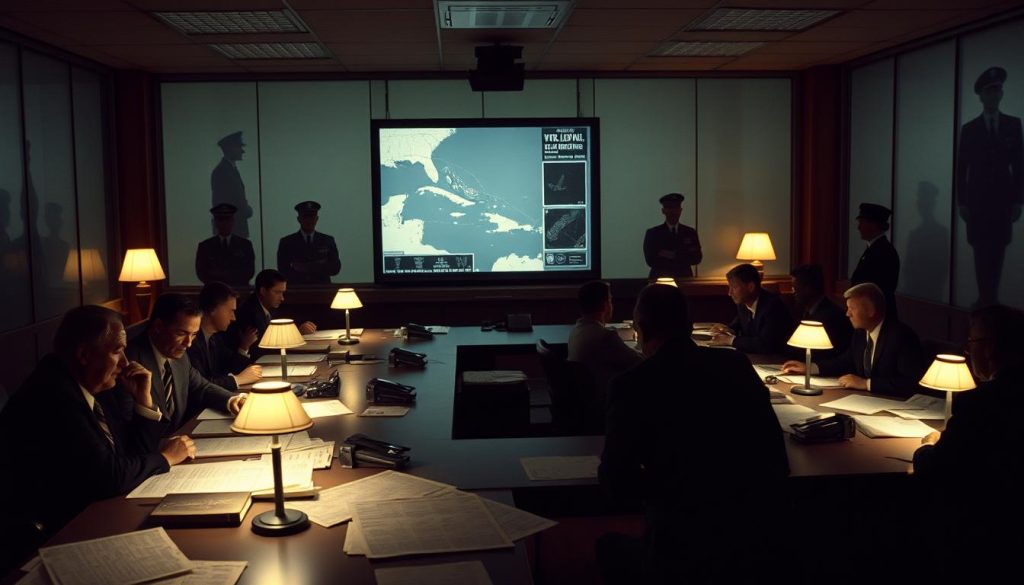
A compact timeline lays out how thirteen consecutive days forced leaders into urgent judgement calls. This section traces key actions and signals so readers can see how options narrowed with each day.
U.S. reconnaissance and the first evidence of missile sites
High-altitude photos identified prepared sites and launchers. Analysts in the United States used imagery to confirm range and readiness.
That early evidence shaped immediate policy options and raised alarm across command centers.
Emergency meetings and the search for workable options
Leaders convened repeated sessions to weigh strikes, blockade, and diplomacy. Debate focused on avoiding irreversible actions while preserving deterrence.
The naval “quarantine” and global escalation
Officials chose the term quarantine to limit legal and diplomatic fallout. The move signaled resolve to the wider world without an immediate path to full war.
Back-channel messages, public speeches, and shifting demands
Public rhetoric and private notes moved at odds. Back-channel offers narrowed bargaining space even as leaders maintained tough public postures.
Near-miss moments that could have triggered war
Recon flights, patrol clashes, and misread signals created several near-catastrophes. Small errors might have escalated despite top-level restraint.
The final agreement and stand-down
An exchange of withdrawal terms and assurances produced a negotiated stand-down. Immediate public statements entered the official record, while fuller aspects of the history emerged later.
- Day 1–3: Reconnaissance confirms deployment and alerts leadership.
- Day 4–6: Intense debate yields the quarantine option.
- Day 7–9: Naval moves, public speeches, and secret messages cross paths.
- Day 10–12: Tense stand-offs and near-misses raise stakes.
- Day 13: Agreement reached; missiles removed and crisis winds down.
Decision-Making Under Pressure
Planners turned incomplete information into urgent choices under a tight deadline. They balanced immediate military aims against the danger that any move could escalate. This section explains the work behind airstrike, invasion, and blockade options and how leaders managed uncertainty.
Why leaders weighed airstrikes, invasion, and blockade
An airstrike promised speed and disruption, but intelligence gaps made targeting hazardous. Strikes risked destroying launchers yet triggering retaliation beyond control.
An invasion offered decisive removal of the threat. It also raised the highest chance of broad war and deep second‑order consequences for allies and local populations.
The blockade, or quarantine, gave policymakers a graded pressure tool. It allowed measured steps, while still carrying a real risk of miscalculation at sea.
Managing uncertainty, time, and incomplete intelligence
Decision teams argued assumptions, revised plans as new photos arrived, and weighed political costs. They treated estimates as provisional and used back‑channel diplomacy to buy time.
- Rapid verification: test claims before committing force.
- Staged options: prefer moves that leave room to step up or down.
- Contingency planning: anticipate second- and third-order effects.
These dynamics are rooted in past crisis work and carry lessons for today. Understanding the decision process helps policymakers learn responsibly from the events without simplifying the record of what happened.
Diplomacy, Deterrence, and Crisis Communication
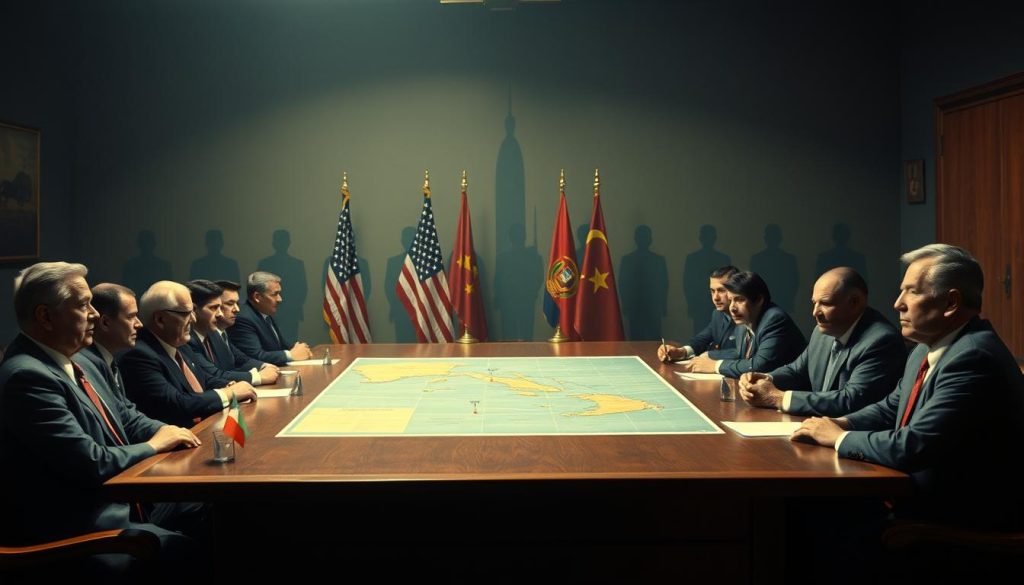
Deterrence worked through perceived costs and careful messaging, not just force. Leaders on both sides used signals to shape what opponents thought was credible and costly. That mix of threats and assurances guided choices during tense moments.
How deterrence shaped behavior on both sides
Each government sought to make the cost of attack seem unacceptable. Spending on visibility, patrols, and public statements increased perceived resolve.
At the same time, policymakers balanced risk so deterrence did not become a self-fulfilling trigger.
Public signals vs. private bargaining
Public speeches and naval moves aimed to reassure allies and pressure opponents. Private notes and back-channel talks allowed tradeoffs without losing face.
Public toughness sometimes obscured the concessions that actually settled disputes.
The role of allies and “others” in widening the stakes
Allies, regional actors, and commanders added layers of interest. Their reactions could create new flashpoints or constrain bold moves.
- Small peripheral events often changed calculations.
- Visible stories about strength did not always match the quiet diplomacy that resolved things.
- Understanding these dynamics helps readers judge the record and the methods that follow.
History, Methods, and the Record of What Happened
Scholars piece together the past by testing sources and weighing what each item can reliably tell us.
What history studies and why method matters
History is disciplined inquiry into the human past. It analyzes evidence to build explanations about events and motives.
This work helps readers separate well-supported claims from attractive but unsupported stories.
Primary and secondary sources
Primary sources were created during the crisis: memos, photos, transcripts. Secondary sources interpret those materials later.
Classification, declassification, and new releases reshape the available record and change what historians can say.
Source criticism and changing narratives
External criticism checks authenticity; internal criticism tests accuracy and omissions. Together they show which documents are reliable.
Historiography studies how interpretations shift as new evidence appears. That explains why a single story can evolve over time.
- Triangulate: compare independent sources before accepting a claim.
- Check bias: memoirs and official files can omit inconvenient facts.
- Beware pseudohistory: emotive framing can distort the record.
When the article makes claims, it follows these standards and notes uncertainty where the record remains incomplete.
Aftermath and Global Consequences
Immediate calm after the confrontation hid deeper shifts in military planning and diplomatic practice. Policymakers moved to stabilize the situation while starting a longer rewrite of doctrine and priorities.
Arms control and strategic change
Within months, talks gained momentum. Leaders pursued arms control measures to reduce the odds that similar crises would spiral.
Deterrence strategies adjusted toward survivability, verification, and clearer crisis communication.
Alliances, credibility, and reputations
Allied relationships required reassurance. Credibility became a mix of force posture and sustained diplomacy.
Public ratings of leaders shifted as later documents reframed who took which risks.
Economic and defense business effects
Defense spending and procurement priorities rose for several years as governments funded readiness and industry capacity.
Business in defense sectors expanded, shaping budgets and industrial planning for decades.
- Short term: reduced immediate danger and new communication channels.
- Long term: treaty momentum, changed strategy, and sustained defense spending.
- Legacy today: incentives from those events still shape how states balance risk and reassurance.
The Cuban Missile Crisis in American Memory and Public History
The way institutions package the past affects how the public sees key Cold War moments. Museums, broadcasters, and schools decide which episodes enter popular view and which remain technical detail.
How museums, media, and education shape the stories people remember
Curators select artifacts, captions, and timelines to make complex events accessible. A display by a state museum can simplify choices so visitors grasp the arc of events quickly.
Major media brands also steer attention. Email newsletters, documentaries, and podcast series repeat narratives and determine which stories travel widely today.
Why commemoration can differ from the historical record
Commemoration often favors clear arcs and heroes. Political incentives, audience expectations, and donor influence can push accounts away from the fuller record.
- Check sourcing: are primary documents cited?
- Watch quotation context: is nuance preserved?
- Look for uncertainty: does the account admit gaps in the record?
Recognize the role of others—editors, teachers, producers—in shaping public-facing narratives so readers judge popular accounts against the documentary past.
Lessons for the Present
Careful study of past decisions produces concrete guidance, not simple moral tales. This section turns the crisis into practical rules policymakers can use without assuming the present is identical to the past.
Practical rules for modern leaders
- Keep off‑ramps open: design steps that allow de‑escalation rather than force irreversible moves.
- Separate public from private: preserve room for confidential bargaining while keeping public messaging clear.
- Make actions legible: ensure military moves and diplomatic signals are understandable to allies and rivals.
- Manage coalitions: brief partners and others early to reduce accidental escalation from misaligned incentives.
- Plan for verification: build timely ways to confirm facts before committing force or accepting claims about events.
Spotting pseudohistory and misleading narratives
Watch for cherry‑picked documents and stories that ignore mainstream evidence. Skepticism helps: require multiple credible sources and avoid one‑cause explanations.
- Check primary documents against independent records.
- Demand context for striking claims about motives or outcomes.
- Prefer analyses that admit uncertainty instead of asserting absolute certainty.
When readers verify key events and resist simple stories, they help leaders learn responsibly from the past and better manage risks in the world.
Conclusion
When trust erodes and signals blur, even short episodes can reshape the world. The Cuban Missile Crisis remains essential history because it shows how rapidly tension can turn toward catastrophe when information and trust are limited.
Leaders in the crisis reacted to constraints, incentives, and uncertainty. Outcomes depended on process as much as on personality. Respect for evidence and careful method kept the record reliable and the narrative honest about the past.
The most useful lessons for today are procedural: disciplined communication, clear escalation controls, and humility under uncertainty. Interpretations will change over the years as new documents appear — that evolution strengthens serious inquiry rather than weakens it.