The Battle of Stalingrad is framed here as a defining history topic on the Eastern Front and as the subject of an “Ultimate Guide” for readers who want clear narrative and practical analysis.
The introduction previews the central claim: Stalingrad was not only a dramatic clash but a measurable turning point that shaped later events. It will weigh evidence and show how outcomes shifted momentum on the Eastern Front.
Readers will learn where this battle sits in the past timeline, the key geography and personalities, the major phases of fighting, and the research tools historians use to reconstruct the fight. The guide will explain why interpretations vary and how scholars test competing accounts.
This piece adopts a U.S.-oriented lens by noting how Stalingrad appears in American education and media, while keeping a focus on evidence. From the start, it separates battlefield facts from mythmaking and emphasizes reliable sources and scholarly standards.
Key Takeaways
- Stalingrad is presented as a decisive turning point on the Eastern Front.
- The guide balances narrative with methods historians use to verify facts.
- Readers will get timeline, geography, people, and phase summaries.
- Interpretations vary; the article shows how scholars test claims.
- The U.S. perspective on Stalingrad is noted, but analysis remains evidence-based.
Why Stalingrad Still Matters in the Past and Present
What happened at Stalingrad shifted strategy and belief about the war’s direction. Militarily, the battle recalibrated what commanders thought was possible on the Eastern Front. It changed planning, morale, and alliance confidence well beyond a single campaign.
How the battle reshaped the Eastern Front and global war expectations
The operational outcomes forced new priorities for both sides. Frontline reversals altered supply plans and prompted broader strategic shifts across theaters. Those events made Stalingrad a pivot point in the study of modern warfare.
What makes Stalingrad a lasting subject in American memory
In the United States, Stalingrad remains a common subject in documentaries, museum narratives, and classrooms. Public discussion links the past to ideas of endurance and sacrifice, even when stories are simplified.
Modern engagement often arrives through branded media and email publishing, where U.S. readers must opt in and can opt out; typical rules require recipients to be 16+ and note privacy and terms links. The article stays committed to evidence-based interpretation, warning that compelling narratives can sometimes outpace what the record supports.
- Key effect: shifted military expectations and alliance planning.
- Public memory: sustained through media, museums, and classrooms.
- Consumption: often via email-driven outlets with U.S. opt-in norms.
Stalingrad in Time: Where It Fits in World War II’s Timeline
Understanding when Stalingrad occurred helps explain why later campaigns unfolded as they did. Placing the battle in a clear time frame shows how shifts in logistics, morale, and strategy followed specific years and seasons.
Periodization divides the war into themed spans so historians can compare events without reducing complex fights to single dates. Labels like “mid-war turning point” let scholars weigh cause and consequence across years.
Chronology gives the sequence of past events; interpretation explains why those events mattered. A timeline is necessary, but it is not enough to show the forces that changed after a battle.
- Turning point defined: measurable operational shifts, resource reallocations, and new strategic constraints.
- How to test claims: compare what changed before versus after across units, theaters, and years.
- Why timing matters: the battle’s placement affected supply lines and political choices in subsequent campaigns.
Readers should expect debate: whether Stalingrad is the single turning point depends on the period and metric chosen. The section sets a disciplined way to judge those competing stories about the past.
The City as a Strategic Target
Stalingrad’s location and industry made it a practical objective, not just a symbolic prize. Its factories, rail junctions, and the Volga River formed a network that shaped what each side could move, feed, and replace during months of combat.
Geography, industry, and the Volga River’s role in the campaign
The Volga acted as a supply corridor for men and materiel and as a barrier that fixed lines of advance. Rail yards and key factories concentrated repair, production, and storage in the city. Distance to other depots limited how fast reinforcements could arrive.
Why urban terrain changed the way both armies fought
Streets, buildings, and rubble compressed fighting into short sightlines. Small-unit choices mattered more than grand maneuvers. Open-field doctrine gave way to block-by-block attrition, altering how commanders used artillery, tanks, and scouts.
- Impact on arms: Armor and artillery lost mobility in built terrain.
- Command limits: Communications and reconnaissance suffered, producing local initiative.
- Records: City fighting created dense unit logs, maps, and gaps that shape later history research.
The People of Stalingrad: Soldiers, Civilians, and Commanders
The actions of soldiers, civilians, and commanders turned abstract plans into urgent choices on the ground. This section centers the people who made the battle what it was and explains how human decisions shaped outcomes.
Front-line troops and close-quarters combat
Front-line soldiers fought in noise, smoke, and broken sightlines. Short bursts of violence, rapid casualty cycles, and chaotic movement made training and unit cohesion vital.
Letters and reports show how small-unit leadership often decided whether a position held or folded.
Civilians and the human cost
Civilians sheltered in ruins, faced displacement, and saw normal family life collapse. Forced labor and shortages amplified harm to local populations.
Command choices and battlefield results
Commanders set priorities, moved reserves, and issued discipline policies that changed the tempo of fighting. Rigid plans sometimes increased losses; flexible responses could preserve forces.
- Orders became actions that saved lives or sped defeats.
- Soldier letters, civilian testimony, and commander messages often conflict.
- Historians must weigh these sources to reconstruct the past and the wider history.
What We Mean by History When Studying Stalingrad
Defining what counts as the past matters when scholars study Stalingrad and its consequences. This short guide sets a working definition so readers know whether a line reports events or interprets them.
History as the systematic study of the human past
The field treats evidence, questions, and explanation as tools. Scholars use archives, orders, letters, and material remains to test claims.
What happened versus a written account
The same set of events can produce different accounts. A noun like history may name the past itself or a crafted narrative that explains it.
Why interpretations change
New documents or fresh questions can shift emphasis. For example, opening archives or reexamining testimony may move a detail from the margins to the center of an account.
- Etymology note: the word historia links inquiry and testimony to modern method.
- Practice: disciplined work demands evidence, clear reasoning, and openness about uncertainty.
- Context: Stalingrad sits between ancient history storytelling and modern professional method as an example of evolving narrative standards.
How Historians Reconstruct the Battle
Turning fragments of reports and testimony into a clear account requires deliberate method. Researchers frame questions about the past and then seek evidence that answers them. This approach keeps work focused on what can be shown, not what is merely plausible.
The historical method: questions, evidence, and explanation
Scholars define the scope, gather primary and secondary sources, and test reliability through cross-checking. They weigh official reports against diaries and maps to resolve contradictions.
Chronology versus narrative: more than a list of events
A timeline shows when things happened, but it does not explain why choices were made. Historians build narratives that link causes, constraints, and outcomes so readers see processes, not only dates.
- Define scope and key questions.
- Collect and vet competing accounts.
- Construct explanations that fit the strongest evidence.
As an example, the same day’s combat may read differently from a unit diary, a map overlay, or a hospital log. Methods for modern study draw on older methods in history and even ancient history, but now follow stricter standards.
Primary Sources That Record Stalingrad
Primary documents from Stalingrad open a window onto decisions made under extreme pressure. These sources originate during the battle and give direct access to orders, logistics, and personal experience.
Official documents, orders, and wartime communications
Operational orders, situation reports, signals traffic, and logistics requests form the backbone of the military record. They show intent, timing, and constraints, but may hide failures or political filters.
Letters, diaries, and eyewitness testimony
Personal letters and diaries capture morale, rumor, and daily survival in ways official files cannot. Eyewitness accounts provide vivid detail but require care: memory and trauma can reshape what is recalled.
Photographs, recordings, and material remains
Photographs, film, and preserved artifacts corroborate or challenge written claims. In urban combat, maps and ruins help fix positions and sequence events.
Example workflow: a historian cross-checks an order, a unit diary entry, and a photograph to establish a unit’s position and timing.
- Why it matters: primary sources are inputs, not final truth; they require criticism and context.
- Where to look: archives preserve systematic runs of original material for careful study.
Secondary Sources and How They Shape the Story

Secondary works frame scattered documents and images into coherent claims about events and meaning. They do not simply repeat primary materials; they analyze, interpret, and synthesize evidence so readers can evaluate arguments about the past.
What secondary sources do:
- They select a frame—operations, ideology, command culture, or civilian suffering—and organize evidence to support that view.
- They make methodological choices explicit through citations and debate with other scholars.
- They can force revisions when new sources or archives appear.
How historians weigh competing narratives
Scholars compare works by checking citation chains, transparency of method, and how well an author addresses contrary evidence. A strong secondary book explains why its interpretation fits the available sources and notes limits.
Example: the same events can yield different conclusions if an author asks different questions, uses new archive material, or compares the fight to different campaigns. Readers should scan bibliographies and debate categories—operational competence, casualty accounting, logistics, and propaganda—to find works suited to their topics.
Source Criticism: Testing Authenticity and Reliability
Source criticism asks whether a document truly reflects what happened or if it was shaped by the needs of its writer. Researchers use two linked checks—external and internal—to judge a record’s trustworthiness.
External checks: authorship and origin
External criticism verifies who created a file, when and where it originated, and whether it is an original or a later copy. It also looks for signs of alteration or forgery.
Internal checks: meaning, bias, and omissions
Internal criticism examines tone, motive, and gaps. A seemingly precise report can aim to persuade superiors or hide failures. Cross-checking with other materials helps expose such problems.
Archives, databases, and disciplined use
Archives shape what the past preserves; digitization expands discovery but also creates false confidence. Keyword hits are leads, not conclusions. A practical example: a claimed unit strength is tested against ration logs, medical evacuation figures, and independent reports to estimate reliability.
- Best practice: treat every document as testimony to be tested.
- Tip: validate provenance before building a narrative from sources.
The Battle’s Major Phases as Past Events
The battle unfolded in clear stages that link tactical choices to shifting supply lines and command pressures. This section presents the campaign as a sequence of past events so readers can see how operations, terrain, and logistics interacted over time.
The opening offensive and the push toward the city
Initial goals focused on seizing transport hubs and forcing a decision before winter. Advances compressed decision time for field commanders.
Lines of advance followed rail and road axes, with momentum driving fast moves that exposed flanks and stretched supply. That compression of time mattered in the months leading into the colder season.
Street fighting and the struggle for key positions
Urban combat became its own phase. Factories, rail yards, river crossings, and high ground turned into anchor points for repeated assaults.
Close fighting favored small-unit initiative and slowed operational tempo. Supply realities and rubble reshaped how artillery and armor could be used.
Encirclement, attrition, and the collapse of the trapped forces
Encirclement changed everything: resupply, medical evacuation, and command coherence collapsed under isolation.
Attrition wore down units over weeks, eroding morale and making breakout plans less plausible. Historians place these shifts within the broader period of the war to show continuity with earlier campaigns and consequences in later years.
- Phase links: operations tied to geography and supply realities.
- Timing: month- and season-markers orient readers without overloading dates.
- Variation: scholars may define phase boundaries differently depending on their sources and metrics.
Life, Survival, and Medical History on the Eastern Front
Survival on the Eastern Front often hinged on simple needs: heat, food, and shelter. These basics shaped morale and combat power as much as orders or tactics. When supply lines snapped, units and civilians faced an altered day measured in calories and fuel.
Cold and hunger reduced stamina, slowed movement, and increased non-combat losses. Winter clothing, fuel for stoves, and rationed food became tactical variables. Improvisations—burning furniture for heat or converting buildings into shelters—were common when official systems failed.
Wounds and disease formed a key strand of medical history for the siege. Infection control, frostbite, shock, and limited triage determined survival rates. Scarce bandages, few antibiotics, and disrupted evacuation routes turned treatable injuries into fatal ones.
Battlefield care constraints also affected unit strength. Limited medics and clogged evacuation corridors lowered return-to-duty numbers. Medical logs, casualty lists, and evacuation counts thus serve modern researchers as evidence about combat intensity and manpower trends.
- Survival as driver: physiology and environment often decided outcomes.
- Logistics of survival: fuel, clothing, and shelters became strategic concerns.
- Documentation: medical records provide hard data on the past and on daily events.
Why Stalingrad Became a Turning Point
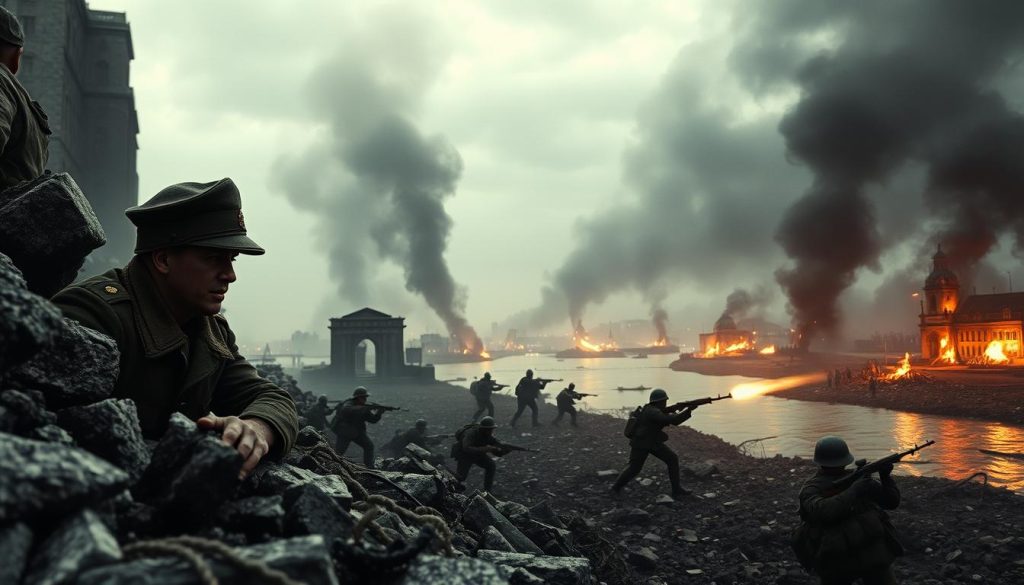
The battle changed measurable conditions on the Eastern Front rather than only producing dramatic stories. It shifted how commanders could move forces, how supply lines functioned, and how both sides counted experienced personnel.
Operational consequences for both sides
Stalingrad cost units trained in urban combat and removed capable formations from the order of battle. That loss forced reorganization and new training priorities.
Logistics planning changed: routes, depot use, and winter preparations were reassessed. These adjustments shaped later events across the Eastern Front for several years.
Psychological and political effects in the next period
Morale and perceived initiative shifted. Confidence rose among one side and fear hardened caution on the other, altering willingness to accept operational risk.
Politically, leaders used the outcome for propaganda and alliance messaging, while facing internal pressure to justify strategies and losses.
- Key point: calling Stalingrad a turning point is an argument based on comparison, not a label automatically applied to large battles.
Meaning and Memory: How Stalingrad Has Been Interpreted Over the Years
Over decades, the meaning assigned to Stalingrad has migrated between scholarship and public ritual. As the raw past stays fixed, the written record and the lenses applied to it keep changing.
Changing interpretations as new sources and methods appear
Archivists have released files that prompt fresh questions about logistics and command choices. New methods—digital mapping, unit-level prosopography, and comparative frameworks—recast familiar events.
Public memory, commemoration, and the making of a defining story
Monuments, anniversaries, films, and school curricula compress complex episodes into a digestible story. Families and local communities often highlight specific experiences as representative, even when the broader record shows variation across units and civilians.
- How meaning forms: scholarly debate plus public rituals shape what most people learn.
- Period effects: different decades stress heroism, suffering, or command failure based on current concerns.
- Continuities: some interpretive frames echo older narrative habits that reach back to ancient history.
Warning: repetition—what some call “history history”—can flatten nuance and obscure evidentiary limits. Readers should weigh sources and ask which topics the record actually supports.
Pseudohistory and Mythmaking: Getting the Record Right
When emotion fills gaps in the record, misleading narratives spread quickly. Large, charged events like Stalingrad invite stories that simplify complex decisions into neat causes and villains.
How selective evidence creates misleading narratives
Pseudohistory in this context relies on disputed fragments, ignores contrary files, or treats a single memoir as proof. Cherry-picking a quote or hiding documents turns a multifaceted set of events into a one-line claim.
Warning signs include missing citations, unverifiable assertions, and an exaggerated tone that dismisses nuance as conspiracy.
Standards historians use to avoid distortion and denialism
Scholars combat distortion through transparent sourcing, external and internal criticism, and readiness to revise conclusions when new evidence appears.
- Compare independent archives and eyewitness accounts.
- Test provenance and motive before accepting a claim.
- Acknowledge gaps rather than inventing answers.
Responsible correction uses multiple sources to confirm or falsify popular claims. These practices protect the record and help the public understand the true past rather than a tidy fiction that suits present agendas.
How to Read Stalingrad Scholarship Like a Historian
A critical reader treats every scholarly chapter as an argument that must be tested, not as a neutral report of facts. This section gives a practical way to read works on Stalingrad so readers can judge claims and track evidence.
Spotting arguments, evidence, and assumptions
Look for a clear thesis and the steps the author takes to support it. Note which sources are cited and whether the author explains why they matter.
Watch word choice: confident language may mask thin proof, while hedged language can signal uncertainty.
Evaluating claims with multiple perspectives
Compare operational accounts with social studies and memoirs. Cross-check archival records against published narratives to see what holds up.
Building a coherent account from isolated facts
Create a simple timeline, map inferred causes, and list contradictions. Keep a running table: what is known, what is inferred, and what remains uncertain.
- Check sources: who, when, and why a document was made.
- Assess criticism: does the author address counterevidence?
- Note gaps: what the chapter leaves unexplained.
- Test empathy with evidence: connect descriptions of people to verifiable records.
Conclusion
Concluding here, the aim is to make the past usable: understand what changed at Stalingrad and how scholars show those changes.
The guide argues that Stalingrad’s importance rests on measurable shifts in operations, morale, and logistics, supported by tested sources rather than a single dramatic storyline.
Readers learned how past events link to method: which documents count, how critics test provenance, and why precise language matters when the word “history” can mean either the past or a written account.
As an example, rewatch a favored documentary and apply the article’s checklist for sources, bias, and omissions. That day’s re-read will show what holds up and what needs revision.
Good historical practice stays open to new evidence while holding firm to standards that protect the record.