The Opium Wars are a key part of world history. In the mid-19th century, conflicts between Qing China and Great Britain changed how they traded. These events made China open ports, give up land like Hong Kong, and accept unfair treaties.
The First Opium War (1839–1842) and the Second Opium War (1856–1860) show how greed and free trade led to empire growth. Britain pushed opium on Chinese markets, causing war. This led to the Treaty of Nanking and other agreements. These actions had a big impact on China for over a century.
Key Takeaways
- The Opium Wars marked a turning point in modern Chinese history and world history.
- Britain China relations were transformed by military force and unequal treaties.
- The First Opium War ended with the Treaty of Nanking in 1842.
- Hong Kong’s transfer to British control followed from these conflicts and treaties.
- Economic motives, like the opium trade, drove imperial actions and long-term change.
Historical Context of the Opium Wars
The late 18th and early 19th centuries were marked by conflict between Britain and Qing China. Trade under the Canton System focused on Guangzhou. Britain had a trade surplus with China, leading to the use of Indian-grown opium.
Opium went from a controlled item to a banned substance. The East India Company grew opium in Bengal and sold it by the thousands. After the EIC monopoly ended in 1834, private traders increased shipments, making opium cheaper and more available.
History research shows a significant increase in opium imports. From about 4,500 chests in 1810 to nearly 40,000 by 1838. This rise in imports led to a huge outflow of silver, affecting trade patterns.
Demand for opium grew due to British tea cravings and Chinese silver needs. Smuggling networks ignored bans from 1729 to 1831. This disregard for laws changed trade patterns in Asia and Europe.
Opium use had cultural and social impacts. It led to addiction, drained silver, and harmed public health. The Qing court saw opium as a moral and financial threat, leading to Lin Zexu’s campaign in 1839.
Understanding the opium trade is key to the Opium Wars. It shows how commerce, profit, and human cost affected relations between Britain and China. This period was a turning point in their history.
The First Opium War (1839-1842)
The First Opium War was a key event that changed how Britain and China interacted. It started over trade disputes and grew into a full-blown war. This part of history looks at the reasons, battles, and the peace treaty that ended it.
Causes of the conflict
Britain wanted free trade, but China had laws against opium. Lin Zexu destroyed a huge amount of opium, leading to tensions. His actions and a letter to Queen Victoria made Britain demand compensation and protection.
By late 1839, fights between Chinese and British ships got worse. Experts say economic pressure, failed diplomacy, and distrust led to war. These reasons explain how a trade issue turned into a military fight.
Major battles and key events
In June 1840, a British fleet arrived with advanced ships and troops. Their steamships, troops, and guns let them attack Chinese forts and take key ports.
They bombarded Guangzhou and attacked Zhenjiang. British forces kept winning, cutting off supplies and forcing China to give in. This led to a clear British victory in the war.
The Treaty of Nanking
Peace was made in 1842 with the Treaty of Nanking. Britain got Hong Kong Island and opened five ports. China had to pay a lot of money and let Britain have special rights.
The treaty also gave Britain special trade benefits. It ended the Canton System and set a bad example for future treaties. This changed trade in the region a lot.
The Treaty of Nanking: Terms and Consequences
The Treaty of Nanking changed how China and Britain interacted. It brought big legal and economic changes to the Qing Empire. These changes are key to understanding how unfair diplomacy affected global trade.
China had to give Hong Kong Island to Britain. The treaty also ended the Canton System. It opened five ports, including Shanghai, for British trade and living.
Territorial losses for China
- Hong Kong Island was ceded as a permanent possession to Britain.
- Control of port access shifted toward foreign powers, reducing Qing control over coastal regions.
- Subsequent agreements and leases expanded British presence, shaping long-term territorial change.
Indemnity payments and trade implications
- The Qing government agreed to pay reparations totaling about 21 million silver dollars, with a large initial payment followed by installments.
- Extraterritoriality shielded British citizens from Chinese courts, requiring consular jurisdiction in opened ports.
- The most-favored-nation clause guaranteed British gains from future treaties, creating lasting trade implications for China and for world history.
The Treaty of Nanking is seen as the start of unfair treaties that hurt Qing power. It didn’t help China but led to more imports, like opium, later on. For those looking for quick history facts, this treaty is key to understanding 19th-century trade changes.
The Impact of the Opium Wars on China
The Opium Wars had a lasting impact on China. They changed the country’s role in the world and led to big changes in government, society, and health. These changes caused political and social problems that lasted for a long time.
Social upheavals happened after the Qing government lost power in many areas. Families lost their main breadwinners to addiction or war. This reduced the number of workers in important provinces, lowering food and taxes.
Officials like Lin Zexu tried to stop the opium trade by executing dealers and seizing their supplies. But, addiction kept growing well into the 19th century.
The health of the public suffered greatly. More people died, families were broken, and withdrawal symptoms were common. Addiction made communities weaker during hard times like famines and floods. Medical care was limited, so local leaders and foreign hospitals had to help a lot.
Social Upheavals and Public Health Crisis
Opium caused many problems, including lost jobs, less taxes, and moral worries among the wealthy. The Qing government was under pressure to act but was struggling. Cities saw more crime and vagrancy because of addiction, leading to calls for change from officials and foreigners.
The history of public health during this time shows how a trade problem can lead to a weak state. Hospitals and missionary clinics reported more cases than official records. This makes it hard to fully understand the damage to Chinese society.
The Rise of Internal Rebellions
With a weak central government, big uprisings started. The Taiping Rebellion began soon after the First Opium War and became one of the deadliest conflicts of the century. Rebels took Nanjing and wanted to change the Qing government.
These rebellions took a lot from the government and military. Local armies and foreign soldiers helped put down the uprisings. This made it harder for China to resist foreign attacks, adding to the lasting effects of early defeats.
The effects of addiction, public unrest, and rebellions shaped China’s future. People at the time saw these problems as part of a bigger change in Asia. They showed how local issues can lead to global changes in history.
The Second Opium War (1856-1860)
The Second Opium War changed how China and the West interacted. It’s a key event in the 19th century. Britain and France wanted more than just trade. They pushed for diplomatic access and legal rights for foreigners.
China’s refusal to accept these demands led to war. The Arrow affair was a major reason for the conflict. It showed the rising tensions over trade and diplomatic relations.
Causes and Motivations
Britain wanted better trade access and legal protections for merchants. China’s refusal to let foreign envoys into Beijing caused problems. The Arrow affair, where Chinese detained crew members, was a turning point.
France joined the war after a missionary was executed. These incidents led to a conflict that lasted from 1856 to 1860.
Major Conflicts and Military Strategies
Allied forces took Guangzhou and moved north. They used steam ships to control rivers. This allowed them to attack fortified areas.
- Steam frigates and gunboats gave the Anglo-French fleet an edge in riverine warfare.
- Combined amphibious operations secured coastal cities before inland advances.
- By 1860, British and French forces numbered roughly 15,000 and 7,000 respectively during the assault on Beijing.
The war included the destruction of the Old Summer Palace in 1860. This event forced China to accept terms they had resisted. Scholars study this campaign for its use of naval power and tactics.
The Treaty of Tientsin
The Treaty of Tientsin was signed in 1858. It opened more ports and allowed the opium trade. It also gave foreigners the right to live in Beijing and allowed missionaries to work in China.
- Opening of a second group of ten treaty ports for trade and residence.
- Legal recognition of opium commerce and reparations to Britain and France.
- Rights for missionaries and freer movement for traders within China.
The Convention of Peking in 1860 confirmed these terms. It also included indemnities and territorial cessions, like the Kowloon Peninsula. This marked a significant change in China’s relations with Western powers.
The Treaty of Tientsin: Broader Implications
The Treaty of Tientsin changed China’s diplomatic and commercial world in big ways. Scholars look at many history resources to see how it forced new rules on Qing officials. It also changed how ports were accessed and set patterns of foreign presence that lasted for many years.
The treaties made China accept Western-style diplomacy and pay reparations. They also allowed foreigners to have their own courts. This weakened the emperor’s power and helped make unfair treaties a part of international law.
Legalization of opium was a big result of the treaty. The British wanted to trade opium, and they got what they wanted. This change had big effects on the economy and society in coastal areas.
Foreign influence grew with new treaty ports, more missionaries, and consulates. Britain got to control Hong Kong and Kowloon, and later got even more land. This made Hong Kong a key place for global trade and finance.
Key consequences include:
- Opening of additional treaty ports that increased commercial access.
- Greater freedom for missionaries to travel inland and proselytize.
- Legal structures that privileged foreigners over Chinese subjects in courts and commerce.
Researchers say these changes led to stories of national shame and the need for reform. The Treaty of Tientsin set the stage for debates on sovereignty, modernization, and resistance in late Qing China.
International Reactions to the Opium Wars
The Opium Wars caused a stir worldwide, changing how countries traded and talked to each other. Newspapers and diplomats in Europe and the U.S. argued over the rightness of using force to push trade. This debate has left a lasting impact on studies of imperialism and trade.
France, the U.S., and Russia followed Britain’s example in trying to get more from China. France got its way with the Treaty of Whampoa in 1844, securing rights for missionaries and traders. The U.S. also got its own treaty, Wanghia, in 1844. These moves show how Western powers competed with each other.
Some people in the West spoke out against the opium trade. Newspapers in Britain and America criticized the opium trade and the use of force. Today, historians use these old articles to understand public opinion and how policies were made.
Impact on Global Trade Policies
The wars led to new rules in East Asia, like extraterritoriality and fixed tariffs. These rules were later used in other parts of Asia and Africa. They changed how countries traded and negotiated.
Britain’s push for free trade was backed by its navy. This approach was followed by others, changing diplomacy and setting important precedents. These changes are key to understanding world history.
Today, historians study how these events shaped international law and trade networks. By looking at old diplomatic letters and trade records, they see how the Opium Wars influenced global relations in the 19th century.
The Role of Missionaries During the Opium Wars
Western missionaries arrived in 19th-century China, changing life in ports and towns. They brought schools, hospitals, and print media. This opened a new path for ideas, sparking debate on foreign influence and sovereignty.
Cultural exchange and tension
Missionaries worked as translators, teachers, and doctors. They taught Western sciences and languages. This gave Chinese students access to new knowledge.
But, some locals saw missionaries as agents of imperial power. Tensions grew when missionary activities seemed to challenge traditional practices. Conflicts also arose when converts faced opposition from their neighbors.
Missionary efforts in China
- Many missionaries worked from treaty ports after the treaties opened China. The Treaty of Tientsin allowed them to travel inland and spread their message. This increased their reach beyond coastal areas.
- Medical missions introduced Western health techniques, reducing deaths in some communities. Hospitals and clinics became hubs for cultural exchange and practical help.
- Missionary presses published books on religion and science. These publications were also history resources for Chinese readers interested in global events and past civilizations.
- Some diplomatic incidents involved missionaries, used by Western governments to justify military actions. This linked missionary protection to broader imperial goals.
Missionaries in China left a complex legacy. Their schools and clinics created lasting institutions. Yet, their presence also fueled debates on foreign power and cultural identity during a tumultuous time.
The Opium Wars and Chinese Nationalism
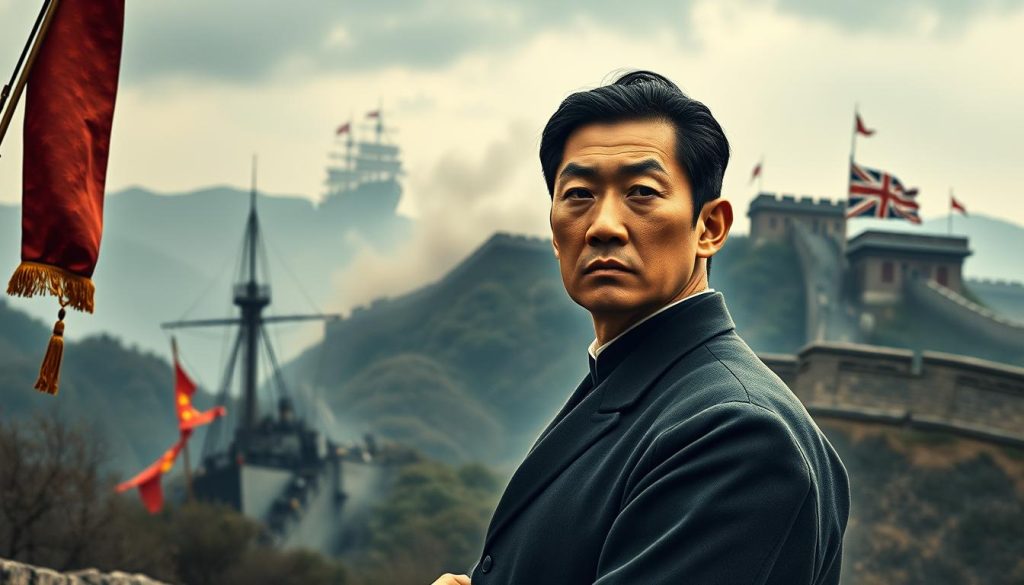
The Opium Wars changed China’s role in the history of the world. Defeat and unfair treaties created a strong story that stuck in people’s minds. This story helped shape modern Chinese nationalism and the desire to regain lost power.
Many saw the wars as the start of a “Century of Humiliation.” This term is in school history and in political talks. It views foreign interference as a moral and strategic failure that needs fixing.
H3: The Emergence of Anti-Imperialist Sentiment
Public anger over treaty ports and payments sparked early anti-imperialist feelings. Figures like Lin Zexu became symbols of resistance. Urban thinkers protested unfair treatment and called for stronger defenses.
H3: Intellectual Movements and Reform
After defeat, debates started. Officials and scholars discussed different paths. Some wanted to make peace with Britain and France. Others pushed for military and system reforms.
- Reformers suggested building new ships and arsenals to strengthen the navy.
- Teachers started translating Western books on science, industry, and diplomacy.
- The Self-Strengthening Movement aimed to adopt foreign tech while keeping Confucian values.
These changes highlight the Opium Wars’ place in the historical timeline. They connect immediate shame to a longer path of modernization. This link explains why these events are key to Chinese nationalism and global history in the history of the world.
Long-term Effects of the Opium Wars on China
The Opium Wars changed China in many ways. They weakened the central government, changed markets, and led some officials to try small reforms. Today, historians see these changes as connected, not separate events.
Political Changes and Modernization Efforts
The wars hurt the Qing court’s power. Battles between hardliners and reformers grew. Figures like Lin Zexu became symbols of resistance and exile.
Defeat made some leaders see the need for military and institutional changes. The Self-Strengthening Movement tried to bring in Western technology. But, progress was slow because local leaders opposed big changes and the central government was weak.
Economic Consequences for China
The wars also changed China’s economy. Indemnities and lost tariff control affected finances. Ports like Shanghai and Hong Kong became key trade centers.
Opium trade and trade imbalances drained silver and hurt rural areas. This led to new coastal cities and changed how money flowed. It made it hard for the Qing to handle internal problems.
Historians keep studying old documents and local studies. They aim to understand how politics, modernization, and economy shaped modern China.
The Opium Wars in Popular Culture
The Opium Wars have left a lasting mark on our collective memory. Artists, writers, and filmmakers see these conflicts as key moments in world history. Discussions about the 1860 looting of the Old Summer Palace often appear in works that explore the loss of cultural treasures.
Depictions in literature span from detailed histories to fictional stories. Authors like Julia Lovell and Jonathan Spence portray the wars as moments of Chinese shame and Western power. Through characters like Lin Zexu and Charles Elliot, they aim to make these complex diplomatic battles relatable.
Historical stories weave these conflicts into broader themes. Poetry and writing often use the Old Summer Palace’s destruction to reflect on memory, loss, and identity. Museums with looted items also spark discussions that influence literary works.
Film and visual media revisit the wars through documentaries and dramas. Filmmakers in Hong Kong and mainland China link the Opium Wars to the colony’s history and the 1997 handover. International films and TV series dive into the wars’ causes, battles, and colonial legacy.
- Documentaries analyze old records and personal accounts to teach about sovereignty.
- Historical novels mix personal tales with diplomatic history to engage more people.
- Museums and exhibitions use objects and images to show cultural exchange and tension.
The Opium Wars’ presence in culture influences how we teach history. Educational programs and school curricula use dramatic stories to discuss trade, ethics, and national power. This keeps the topic alive in our collective memory.
In summary, literature and film help us see the Opium Wars as part of global politics. The artistic legacy of the Opium Wars continues to fuel discussions on restitution, memory, and cultural identity.
Perspectives on Historical Responsibility
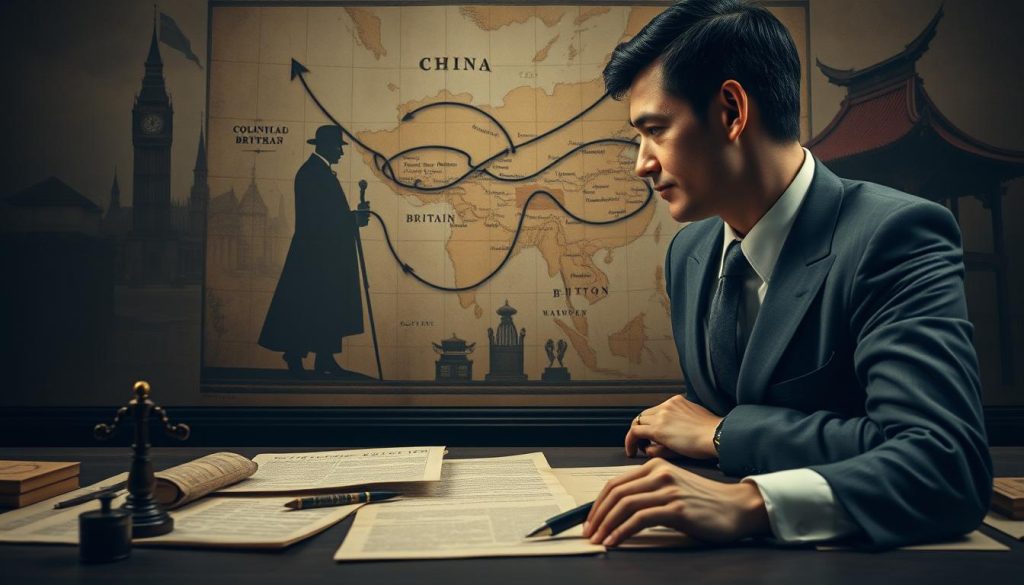
The Opium Wars spark a lot of debate about who should be blamed. Scholars look at motives, laws, and moral issues. This debate shapes how we remember the conflicts and the loss of sovereignty.
Viewpoints from British historians
British historians have different views on the wars. Some see them as disputes over diplomatic status and free trade. Others point out the commercial reasons behind the opium trade and protecting global networks.
Historians like Julia Lovell, William Platt, and Ssu-yü Teng have done a lot of research. They look at military, diplomatic, and economic records. Their work helps us understand government decisions and merchant interests.
Chinese perspectives on the events
Chinese views focus on the moral outrage over forced opium and its social harm. They remember the treaties imposed under duress and the humiliation they caused.
Lin Zexu is a key figure in Chinese history. Chinese historians link the wars to the loss of sovereignty and the need for reform. This view shapes ongoing research and public debates about historical responsibility.
Lessons Learned from the Opium Wars
The Opium Wars teach us about the dangers of mixing trade and power. Looking back at these events helps us understand today’s debates on commerce and human rights.
The importance of ethical trade practices is clear from history. Britain’s push for opium sales while banning it at home is a stark example. This shows how greed can lead to widespread harm.
Today, we can learn from these mistakes. We should focus on fair trade, clear rules, and fixing past wrongs. Schools and museums teach these lessons to inspire better choices.
The role of diplomacy in conflict resolution is another key lesson. The failure to find peaceful solutions led to war. Today, diplomats study these failures to avoid similar mistakes.
History teaches us to value peace and respect for all nations. We should aim for peaceful solutions and fair treaties. This way, we can prevent the misuse of trade for power.
- Use historical case studies in education to teach ethical trade and statecraft.
- Adopt trade rules that align moral standards with commercial law.
- Favor negotiation and arbitration over military pressure in diplomatic strategy.
Conclusion: The Lasting Legacy of the Opium Wars
The Opium Wars had a big impact on modern China and global trade. They led to unfair treaties and changes like Hong Kong’s handover. These events are key to China’s history and shape its views on sovereignty today.
Reflections on Modern Opium Trade and Drug Policy
Today’s debates on the opium trade and drug policy link back to the 19th century. People talk about the ethics of making money from drugs and push for health-focused policies. They use history to support calls for openness, rules, and ways to reduce harm in drug policies worldwide.
The Ongoing Impact on Sino-Western Relations
The Opium Wars’ effects are seen in today’s Sino-Western relations. The 1997 handover of Hong Kong marked a new era but didn’t forget the past. Efforts to return cultural items, trade talks, and discussions on historical wrongs keep influencing their relationship and how the world sees it.