In 1492, Christopher Columbus’s arrival was a turning point in history. It brought together two worlds that had been apart for millions of years. Historian Alfred W. Crosby called this event the Columbian Exchange. It shows how plants, animals, microbes, and people moved across oceans, changing ecosystems and diets.
Vipul Singh highlights 1492 as a key moment in ecological history. The Exchange changed the world quickly. Crops like tomatoes and maize went east, while wheat, cattle, and diseases went west. This exchange changed demographics, economies, and food traditions that affect us today.
The Columbian Exchange was huge and had different effects on people. European powers got new goods like sugar, coffee, and tobacco. But, indigenous populations faced big challenges from new diseases and ecological changes. This event helps us understand how our food systems and global trade came to be.
Key Takeaways
- The Columbian Exchange began with Columbus’s 1492 voyage and reshaped world history.
- Alfred W. Crosby coined the term to describe the global transfer of species and cultures.
- The Exchange integrated crops, livestock, and microbes across a new global network.
- 1492 marked a rapid ecological revolution with long-term demographic and economic effects.
- New foods such as tomatoes and potatoes transformed cuisines and trade patterns worldwide.
Introduction to the Columbian Exchange
The Columbian Exchange started in 1492. It was a big change that moved crops, animals, diseases, and people between the Americas and Afro-Eurasia. This changed diets, economies, and ecosystems.
Scholars say this was a big turning point. Alfred Crosby introduced the term in 1972. He saw it as a key event in modern history.
Definition and Background
The Columbian Exchange involved many things. It included animals like horses and cattle, crops like wheat and sugar, weeds, pests, and diseases like smallpox and measles.
These changes affected how people lived and ate. The Trans-Atlantic Slave Trade also played a role. It brought people and changed labor and food across continents.
Significance of 1492
1492 was more than just a voyage. It ended the separate histories of the Americas and Afro-Eurasia. It started a new era of contact between civilizations and global networks.
After 1492, exchanges kept happening for centuries. They led to trade routes, colonial systems, and new crops. These changes affected what people ate worldwide. History shows how this moment led to big changes in demographics, ecology, and economies.
Early European Diets Before the Exchange
Before 1492, Europeans mainly ate foods from land and animals. They grew wheat, barley, and rye. Animals like cattle, sheep, and pigs gave them meat, dairy, and help with work.
Common foods in Europe
- Breads made from wheat and rye were a big part of meals in Western Europe.
- Barley and oats were used for both people and animals in colder or upland areas.
- Pastoral products like cheese, butter, and salted pork kept calories up during winter.
Influence of geography and climate
Europe’s different climates shaped what people ate. Lowlands were good for growing grains and had many people. But, mountains and northern areas had more animals and hardy grains.
This mix of environments made people rely on a few crops. When New World crops came later, they changed what people ate and how they used land. These changes are part of a bigger story of how history can change diets and societies.
Indigenous Foods of the Americas
The crops and garden plants of the Americas changed diets worldwide. Scholars say these foods were key in changing how people farmed, grew in numbers, and traded. These plants brought calories, nutrients, and new tastes from the Andes to Mesoamerica and beyond.
Staple Crops: Maize and Potatoes
Maize and tubers were the heart of many native economies before Europeans arrived. The history of maize shows how people chose different types for various soils and climates. Corn let societies farm tough lands and plan for more crops.
The potato came from the high Andes, perfect for cool, mountainous areas. Its ability to thrive in such places helped dense populations in northern Europe and elsewhere. Maize and potatoes became key to diets that shaped world history.
Fruits and Vegetables: A Culinary Revelation
After contact, many fruits and vegetables spread to new places. Tomatoes, chilies, avocados, papayas, pineapples, and cacao entered kitchens and markets. Sweet potato and cassava reached Asia and Africa, becoming vital in local foods.
These plants changed how people tasted, cooked, and farmed. The worldwide use of these crops shows the lasting impact of the Americas’ plant diversity.
- Maize: diversified uses, from flour to fermented beverages
- Potatoes: nutritional density and adaptability to poor soils
- Other indigenous crops: tomatoes, chili peppers, cacao, cassava
European Foods Introduced in the Americas
The arrival of European foods changed the Americas a lot. It affected economies, diets, and landscapes. New animals and grains came with sailors, soldiers, and settlers. These brought new practices to foodways and trade.
Livestock
- Cattle, sheep, goats, pigs, chickens, and horses came with Spanish and Portuguese expeditions. Horses changed how people moved and hunted on the Great Plains. Cattle and sheep started ranching in places like Argentina, Mexico, and Venezuela.
- Pigs brought by explorers like Hernando de Soto often ran wild. They spread across forests and coasts, creating lasting feral swine populations in places like North Carolina.
- These animals changed how people grazed, affected native crops, and introduced new economic activities. Hides, tallow, meat markets, and mounted transport were new. These changes are key to livestock history and how settlements grew their farms.
Grains and staples
- Grains like wheat, barley, and rye followed animals to the Americas. Wheat did well in temperate zones and the Mexican highlands. Over time, wheat helped bakery traditions and export economies in North and South America.
- Mediterranean crops like sugar cane and citrus became important where climates were right. These crops connected local production to the Atlantic trade networks and labor systems.
- The arrival of animals and grains changed diets. European foods mixed with native foods, creating new cuisines and farming systems across the Americas.
The Role of Trade Routes
The Columbian Exchange changed trade routes and sped up maritime exploration. New sea lanes connected Europe, Africa, and the Americas. This led to changes in what markets produced and where they got their goods.
Ships carried crops, livestock, and people across oceans. Ballast water and hull fouling moved species between continents. This mixing of species is seen today.
Maritime Exploration and Expansion
Explorers like Christopher Columbus and Ferdinand Magellan opened up ocean travel. New technology and knowledge made long journeys possible. Sailors mapped winds and currents, making trips practical for trade.
Maritime exploration boosted the need for crew, supplies, and ports. Ports like Seville and Amsterdam grew as centers for goods. Crops like maize and potato spread to new continents.
Impact on Global Trade Networks
Trade routes became key to a growing global economy. Goods like sugar, coffee, tobacco, and silver moved between places. European powers built empires based on these flows.
The system needed labor, leading to the Trans-Atlantic Slave Trade. Millions of Africans were forced into plantation work. This changed demographics and labor across the Atlantic.
- New World crops reshaped Eurasian and African agriculture.
- Colonial exports shifted market orientations toward trans-Atlantic demand.
- Integrated trade routes contributed to early phases of globalization.
The shift in trade networks is a key moment in world history. It marked a time when isolated regions became economically linked. These changes laid the groundwork for today’s global markets and cultural exchanges.
Cultural Exchange Through Food

After 1492, plants, animals, and cooking methods moved across continents. This changed daily life everywhere. Food became a key way for cultures to exchange.
Indigenous foods like maize and potatoes mixed with European grains and animals. This created new diets. Enslaved Africans brought their knowledge of crops and cooking, changing how food was made.
Chefs and families mixed tools and flavors. They made dishes that show the rich history of their places.
In ports, markets showed off new foods together. Merchants and cooks tried new things. This led to the creation of vibrant, diverse cuisines.
Influence on American Cuisine
American food shows the impact of cultural exchange. Mexican dishes mix maize, chili, and European pork. Caribbean food combines indigenous produce, European animals, and African cooking methods.
On the Great Plains, horses and new hunting ways changed how people used bison. This affected their food systems.
- New spices and foods changed menus in Europe and Asia.
- Local cooks used European tools but kept traditional methods.
- Cross-cultural kitchens kept old practices alive while trying new things.
These food history discoveries show why American dishes are so global. The mix of traditions keeps food exciting and connected to many places.
Health and Nutrition Post-Exchange
The Columbian Exchange changed diets worldwide, bringing both benefits and losses. New crops like potatoes and maize increased calories in Europe, Africa, and Asia. But, diseases and plantation growth harmed local food systems, causing health issues.
Changes in dietary habits
Potatoes and maize gave more calories, helping populations grow. In West Africa, cassava and peanuts became key foods due to their soil adaptability. In India and Egypt, maize and sweet potatoes changed food security and daily meals.
European and African families started using American foods in their cooking. They made porridges, stews, and breads with these new ingredients. This showed how food spread and was accepted after 1492.
Introduction of new nutrients
New tubers and grains brought different nutrients to diets. This reduced famine risks in many areas. It also helped labor forces grow, linked to later economic events.
But, the shift to sugar and cotton plantations took land away from food. This hurt local nutrition, where farming for food was once common. Diseases like smallpox also hurt indigenous peoples, destroying their food knowledge and practices.
- Potatoes and maize: increased calories and food security
- Cassava and peanuts: resilience on marginal land, impact on West African diets
- Plantations and disease: reduced local food availability and disrupted nutrition history
Economic Impact of the Columbian Exchange
The exchange of plants, animals, and peoples between hemispheres changed markets and labor across the Atlantic. New crops from the Americas fed growing European populations. This fueled export agriculture, linking colonial producers to metropolitan demand.
This shift is a key point in the economic history of the early modern period. It marks a significant moment in the historical timeline of global trade.
Agricultural Workforce Dynamics
Demographic collapse among Indigenous communities reduced local labor pools in the Americas. Colonies responded by importing enslaved Africans. This intensified the trans-atlantic slave trade and changed labor practices.
Plantation economies needed steady, controlled labor. Sugar in the Caribbean and Brazil became very labor-intensive. Planters turned to slavery, creating a labor model that moved people and capital across oceans.
This pattern shows up in world history as a transformation of workforce organization and social relations.
Rise of Cash Crops and Plantations
Cash crops like sugar, tobacco, cotton, and rice dominated export lists. European metropoles profited from colonial commodity chains. These chains delivered raw crops for processing and sale.
Silver flows and Atlantic trade networks further integrated these systems into a broader global market.
Monoculture and deforestation often followed plantation expansion. Land use changes supported export growth but reduced agricultural diversity. Later innovations, like quinine from cinchona bark, enabled Europeans to exploit new regions in Africa and Asia.
This reinforced colonial economic reach and shaped a wider world history.
Key consequences included shifts in commodity prices, the rise of Atlantic economies, and long-term patterns. Historians use these to trace economic history across this historical timeline.
The Spread of Disease
The arrival of Europeans changed ecosystems, economies, and health in the Americas. New diseases came with ships and settlers. These outbreaks changed indigenous societies and the path of colonial expansion.
Epidemics in the Americas
Between the late 15th and 17th centuries, Europeans brought diseases like smallpox and measles. Native populations, estimated at 40–60 million in 1492, had no immunity. Epidemics from 1492 to 1650 killed up to 90% in many areas.
Major cities in Mexico and Peru lost millions. Some Caribbean islands lost their entire indigenous populations.
Outbreaks spread along trade and labor routes. Towns, mission settlements, and military campaigns helped spread the disease. The rapid and massive death toll surprised both contemporaries and later scholars.
Consequences for Indigenous Populations
Disease caused social and ecological system instability. Fields were abandoned, and forests grew back. This had long-term effects on economies and cultures.
Labor shortages led to the use of enslaved African labor. Some believe syphilis moved from the Americas to Europe in 1493. The use of quinine from cinchona helped Europeans fight malaria in tropical colonies.
Warfare, forced labor, and epidemics caused huge declines in indigenous numbers. Scholars believe populations fell from tens of millions to a fraction in a century or two. This collapse is a key part of the Americas and global history.
Modern Implications of the Exchange
The Columbian Exchange changed how we eat and farm worldwide. It linked past discoveries to today’s food systems. Now, we talk about trade, biodiversity, and resilience because of it.
Globalization of Agriculture
Species like wheat, maize, and potatoes are key in global markets today. They travel by air and sea, making farming faster and more connected. This shows how past exchanges have shaped our economies and diets.
Global supply chains are efficient but also risky. Relying on a few crops makes us vulnerable to pests or climate changes. Scientists at places like the International Potato Center work to diversify crops and ensure food security.
Preservation of Indigenous Crops
Efforts are underway to save heirloom varieties and farming wisdom. Seed banks and community programs collect rare seeds of crops like cassava, maize, and quinoa. This helps preserve our agricultural heritage.
By mixing old farming knowledge with new research, we can be more resilient. Plant breeding, genetic banks, and on-farm conservation help keep our food diversity alive. These efforts are a response to the dangers of growing only one crop.
- Agrobiodiversity preserves options for changing climates.
- Seed stewardship keeps local varieties available to farmers.
- Collaborative research links historical discoveries with modern solutions.
Case Study: The Potato’s Journey
The potato went from Andean fields to European plates, changing diets worldwide. This short case study explores key moments in its history and its broad impact.
Introduction to European Cuisine
When the potato arrived in Europe, people were curious. At first, it was slow to be accepted in some places. But its high calories made it great for feeding growing crowds.
By the 18th century, the potato was in kitchens from Spain to Poland. It grew well in poor soil and short seasons. This led to farming in Scandinavia, the Low Countries, and mountain areas.
Economic Impact on Ireland
Ireland’s story with the potato is dramatic. Small farmers grew it because it gave big yields on small plots. This helped the rural poor grow in numbers.
The blight of 1845 showed the dangers of relying on one crop. The Great Famine changed Ireland’s economy and migration patterns. It also affected the British Isles.
- Key history facts: domestication in the Andes; spread to Europe; role in population shifts.
- Historical significance: enabled settlement on marginal lands and supported demographic expansion in Asia and Europe.
- Economic outcomes: altered land use, labor demands, and emigration flows in affected regions.
Lasting Legacy of the Columbian Exchange
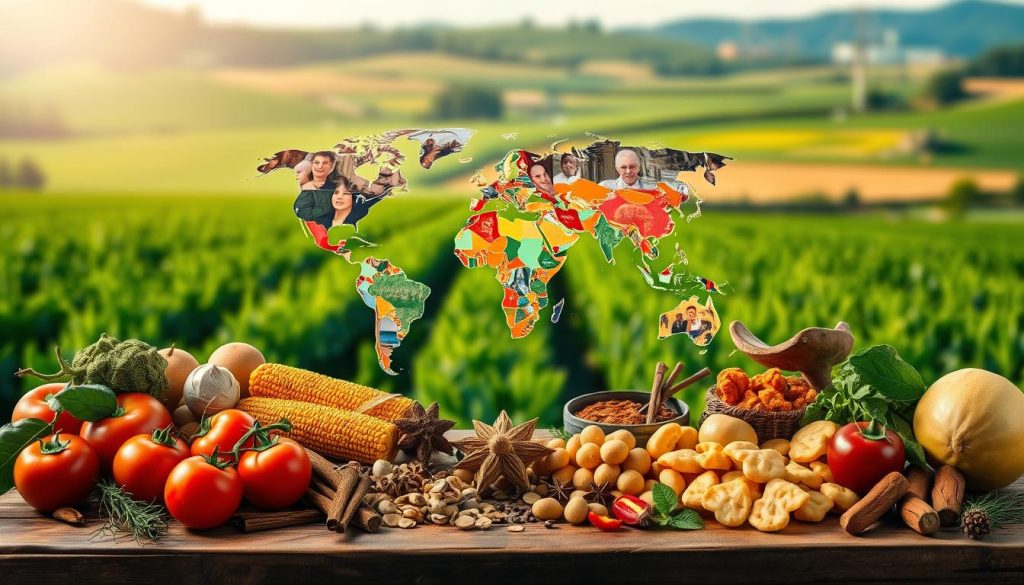
The Columbian Exchange had a big impact on food and culture. Many foods we eat today have a deep history that connects continents. Chefs, farmers, and people buying food see this history in markets, kitchens, and food traditions all over the world.
Influence on global palates
Tomatoes changed Italian and Spanish dishes. Chili peppers changed tastes in Asia and Africa. Cacao started a global chocolate market. These changes show how a few crops changed how we eat and taste food.
Maize and potatoes spread fast and filled gaps in diets. By the late 20th century, crops from the Americas gave about one-third of the world’s calories. This fact is often talked about in discussions of world history and food security.
Transformation of dietary practices
Local diets became mixed with new foods. Urban growth in Europe was linked to new foods from America. People started mixing Old World and New World foods in their meals.
Today’s food systems show this long-lasting change. We see culinary fusion, big farms, and the importance of New World foods in our culture. Looking at history, we see both good and bad effects.
- Expanded cuisines that reached into homes from Tokyo to Lagos.
- Shifts in agricultural patterns and global trade networks.
- Enduring social and ecological consequences tied to plantation systems and forced labor.
Scholars and food experts often talk about the Exchange when studying world history and farming. The early transfers’ historical importance is key in debates about food, the environment, and culture.
Challenges and Critiques of the Exchange
The Columbian Exchange changed ecosystems and lives across continents. Scholars debate the environmental impact versus economic benefits. They also look at the ethics of colonial trade.
Environmental consequences were immediate. Introduced animals, like pigs, and crops like sugar changed landscapes. Deforestation and soil loss followed.
These changes led to single-crop farming. This made lands more vulnerable to pests and market changes. Historians like J.R. McNeill point out how diseases and ecological changes affected empires.
Ethical considerations focus on human losses. Diseases killed many Indigenous people. Forced labor and the Slave Trade built plantation wealth.
Experts like Nathan Nunn and Nancy Qian link these human costs to ongoing economic issues. Critics say unequal trade between old colonies and colonial powers kept them dependent.
- Environmental stresses: deforestation, invasive species, monoculture risks.
- Human costs: demographic collapse, forced labor, slavery, dispossession.
- Economic legacies: unequal trade, market-driven agriculture, persistent inequalities.
Historians compare these changes to past civilizations. They see parallels in how external forces changed economies and ecologies. These comparisons guide today’s debates on responsibility, restitution, and sustainability.
The Role of Technology in the Exchange
The Columbian Exchange was more than just crops and animals moving. It was a wave of technical change. New tools, practices, and institutions spread with goods. This changed farming methods and transport systems, leading to shifts in diet and land use.
Agricultural innovation changed how we farm and work. Europeans brought new farming techniques to colonies. These included plough-based cultivation, enclosure methods, and pasture systems.
These techniques needed new irrigation, drainage, and planting schedules. This was to suit crops like maize, potatoes, and quinine in new places.
Botanical gardens, seed exchanges, and colonial projects helped improve crops. Agronomists and veterinarians shared knowledge on breeding and pest control. Over time, these efforts became part of scientific agriculture.
Agricultural Innovations
- Spread of plough agriculture and pasture models altered land use and labor organization.
- Introduction of irrigation and drainage adapted Old World techniques to New World climates.
- Botanical gardens and seed banks served as hubs for crop testing and diffusion.
Maritime technology was key to the exchange. Advances in shipbuilding and navigation made voyages more reliable. Regular shipping routes carried live plants, livestock, and seeds across continents.
Transportation Advances
- Improved ships and navigational charts enabled faster, safer crossings.
- Steamships and railways later accelerated movement of species and commodities.
- New practices in ballast and cargo handling influenced how organisms traveled internationally.
Technology and transportation advances shaped global food staples. The timeline of these innovations shows a shift from ad hoc transfers to organized, scientific networks. These networks continue to influence modern food systems.
Conclusion: Reflection on Dietary Change
The Columbian Exchange was a major shift in world history and food history. It changed diets, economies, and ecosystems by moving crops, animals, and medicines across oceans. This movement made plates richer and more varied in many places. But it also caused deep inequalities, ecological damage, and population changes that affect food systems today.
Lasting Effects on Today’s Food Systems
Now, crops like maize, potatoes, and tomatoes are key in many cuisines worldwide. The growth of global agricultural markets and monocultures shows the impact of early exchanges. The introduction of quinine and other New World resources changed health strategies, trade, and power.
Future of the Columbian Exchange
The future of agriculture must learn from the past. Saving agrobiodiversity and preserving indigenous crops can fight against monoculture and invasive species. We need to address the colonial legacies in our food systems to build fairness. By using these lessons, we can face climate change and food security challenges better.